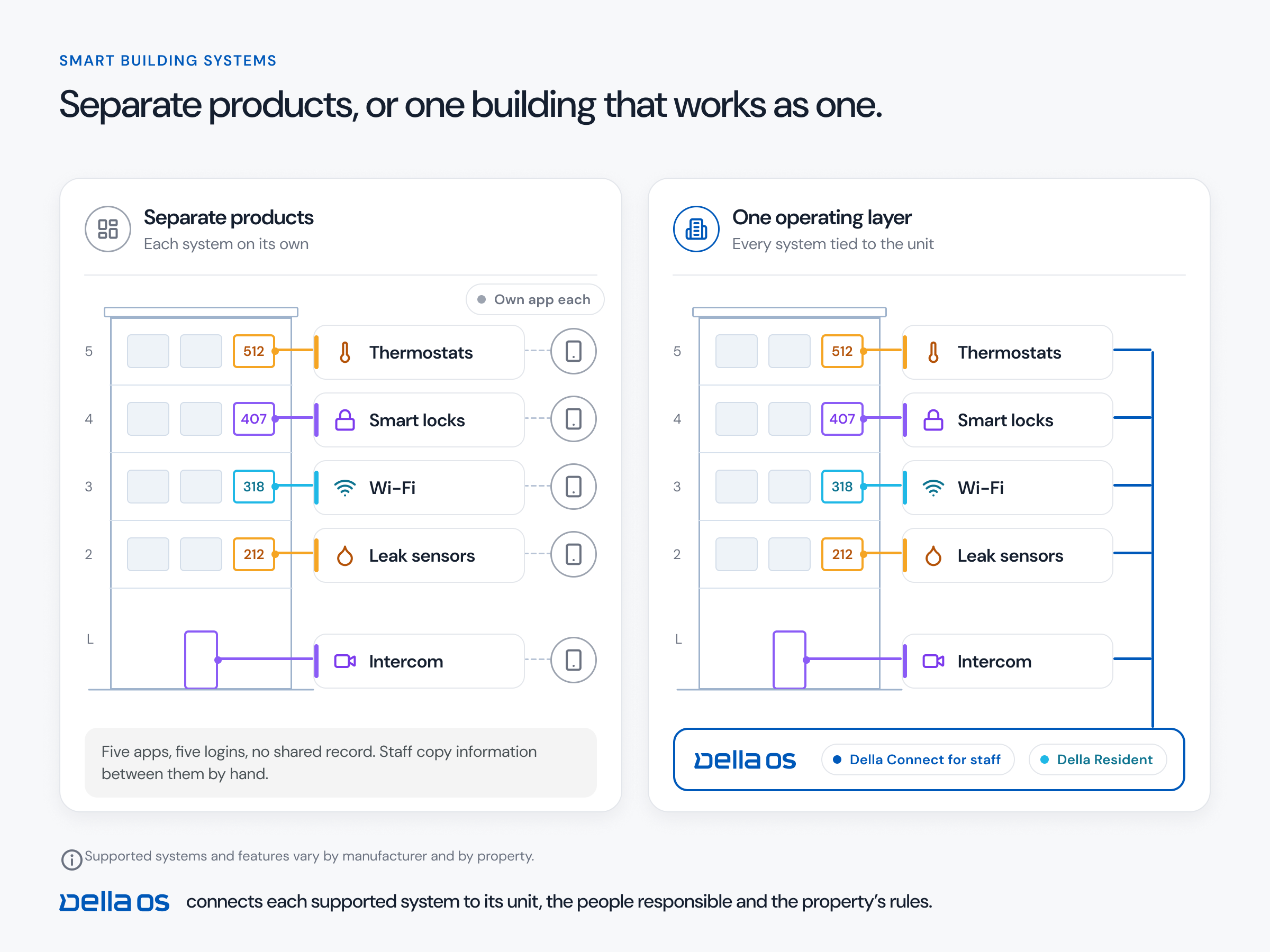
The short answer: put leak sensors where water problems start, send every alert to the people who can act on it, and shut the water off automatically where a compatible valve is installed. In an occupied unit, the resident may be home and able to stop the water fastest; in a vacant unit, nobody is there, so staff need to hear first. A sensor only helps when its alert turns into a response, so connect leak detection to occupancy, to unit access and to your maintenance workflow, not just to another app.
Why leaks cost apartment buildings so much
A slow drip under a sink or a failed supply line can spread through walls and ceilings into the units below before anyone sees it. The risk is highest at night, on weekends and in vacant units, and the damage grows with every hour the water runs. Early detection is valuable only if the right person hears about it right away, knows exactly where to go and can get in.
Where to put leak sensors
- Under kitchen and bathroom sinks
- Behind toilets and washing machines
- Beside water heaters
- Near HVAC equipment and condensate lines
- In mechanical rooms and near risers
- Beside spaces where water would do the most harm, such as electrical rooms
What to look for in a leak detection system
- Reliable sensors with battery and connection reporting, so a silent sensor is noticed.
- Automatic shutoff through compatible valves.
- Every device mapped to its unit and exact location.
- Alert routing you control, by role, time of day and whether the unit is occupied.
- A way to get in when the unit is vacant or nobody is home.
- A work order created from the alert, so nothing depends on someone remembering.
- A record of every incident and how it was resolved.
- A network that fits the building. Many sensors connect through a hub rather than Wi-Fi.
Who should hear first
The fastest response depends on who is there. In an occupied unit, the resident may be home and able to turn off a valve or move belongings in seconds, so many properties alert the resident first and escalate to staff if there's no response. Others alert the resident and staff at the same time. In a vacant unit, the alert should go straight to staff. Choose the approach that suits each property, and make sure it's a setting, not something staff have to remember.
Getting into the unit
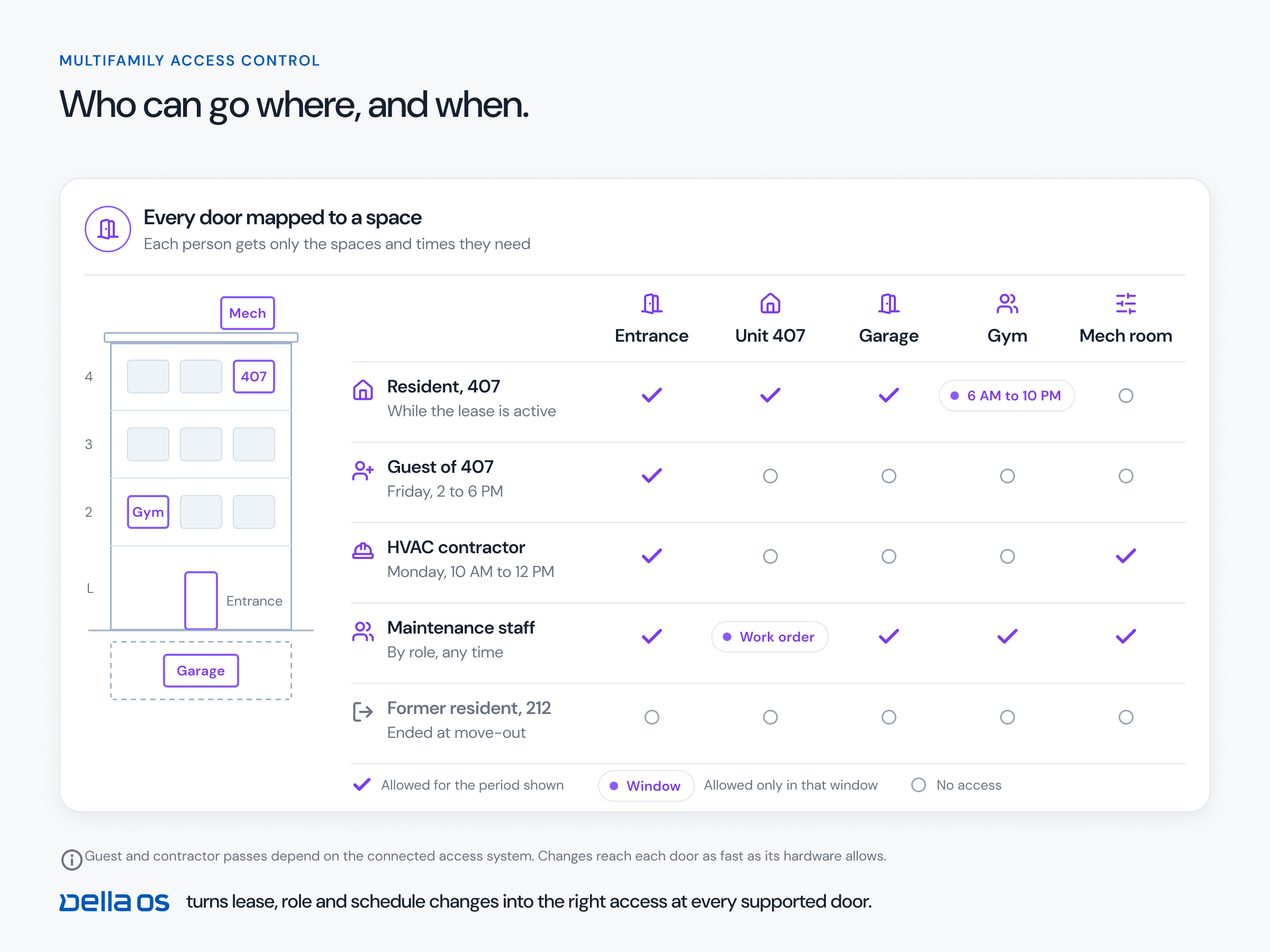
An alert is only useful if someone can reach the water. In a vacant unit, staff can always go in. In an occupied unit where nobody is home, entry depends on what the lease or, for condominiums, the governing documents allow. Plan this in advance: who is allowed in, under what conditions, and how they get a key at 2 AM without anyone driving to the office.
How to set up leak detection that works, step by step
- Map the risk. List the fixtures and equipment most likely to leak, and the units and spaces below them.
- Choose sensors and valves that are compatible with your platform and network.
- Map each device to its unit and location before go live.
- Set the alert strategy. Resident first, staff first or both at once, who hears next and when it escalates.
- Add rules for vacant units. Alerts go to staff, who decide on the response.
- Plan entry. Confirm what your leases or condominium documents allow, and set up how responders get a key to the unit.
- Tie alerts to work orders so every leak has an owner and a record.
- Test regularly. Trigger sensors on a schedule and review every incident.
Where Della OS fits
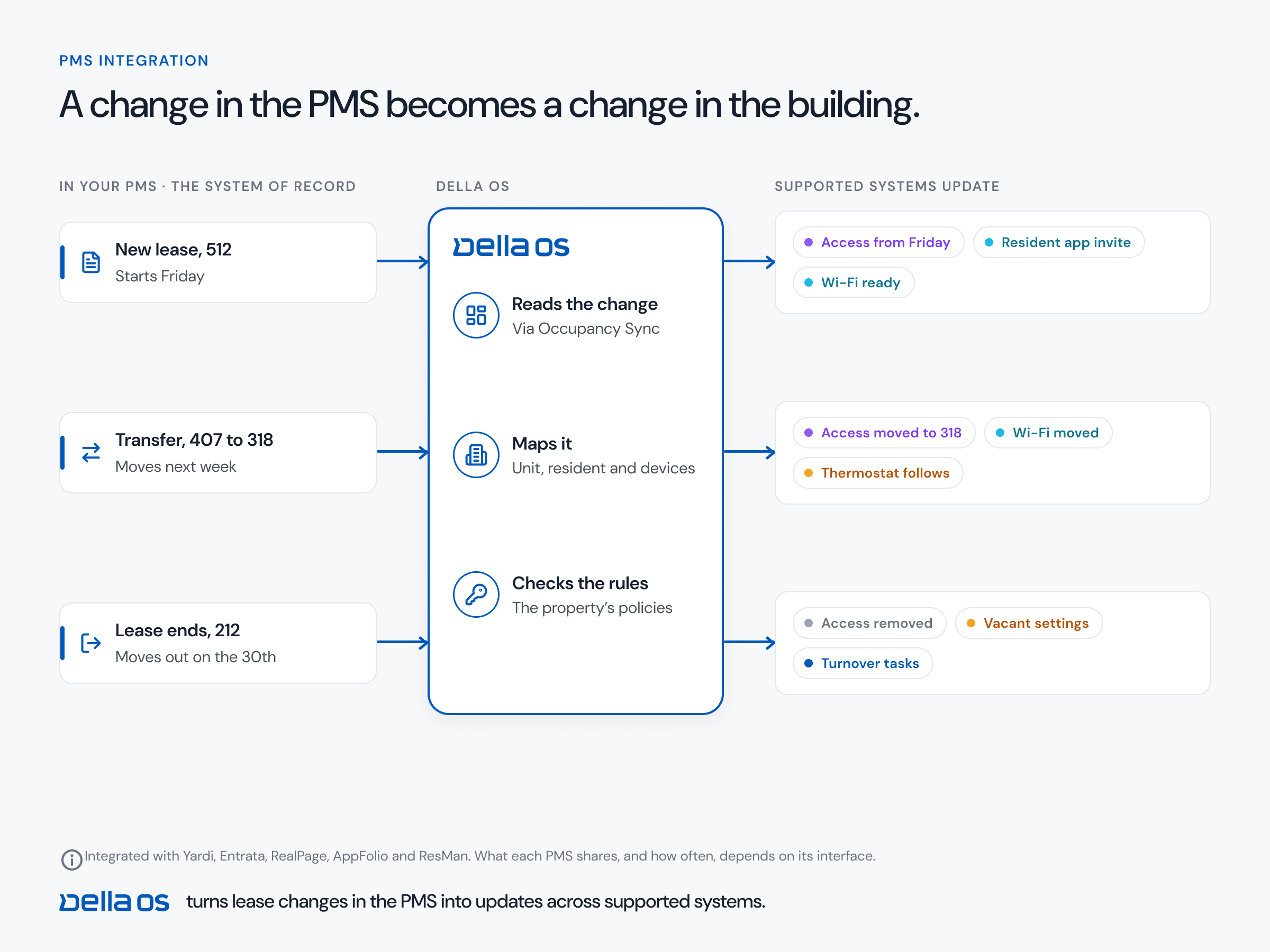
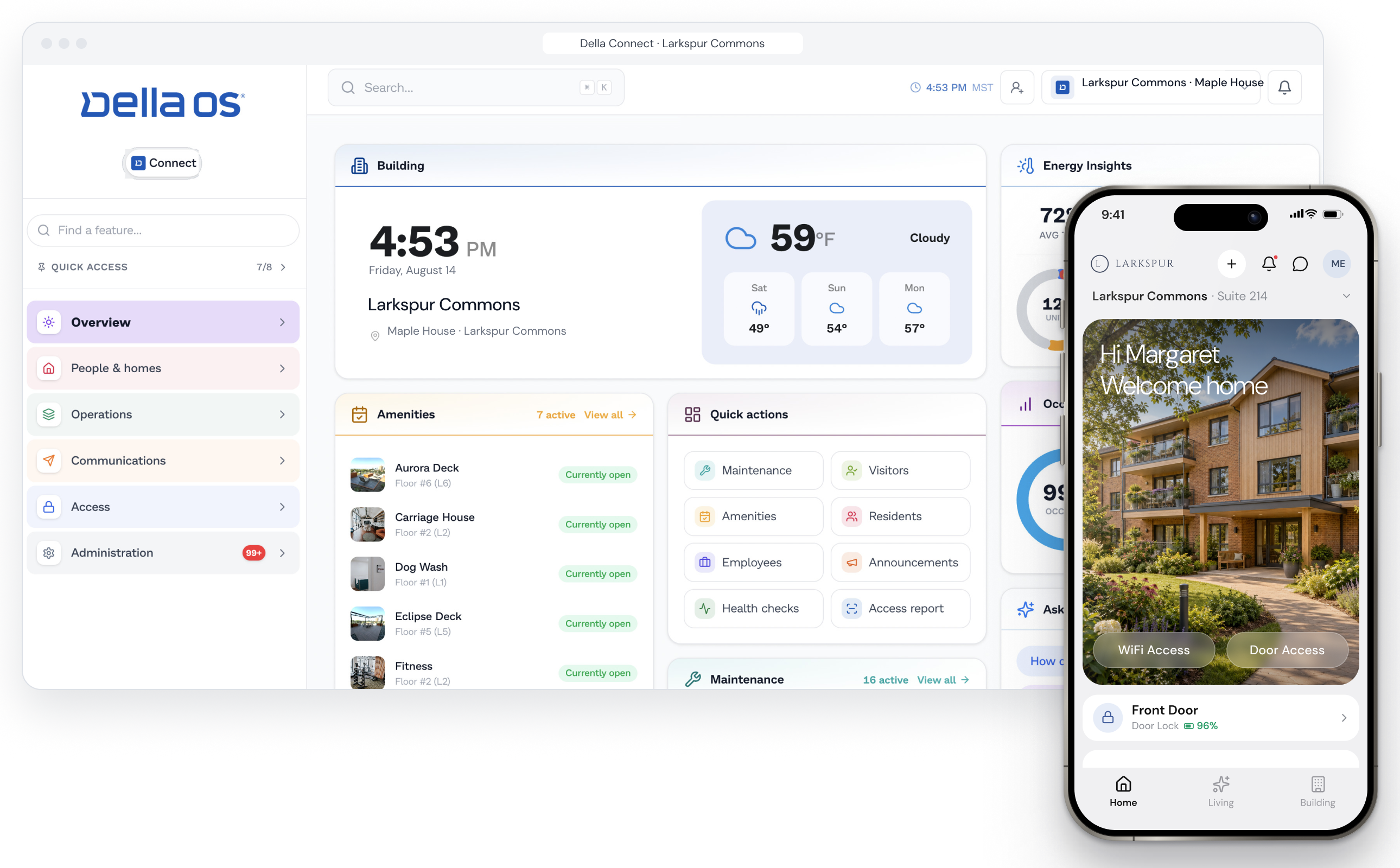
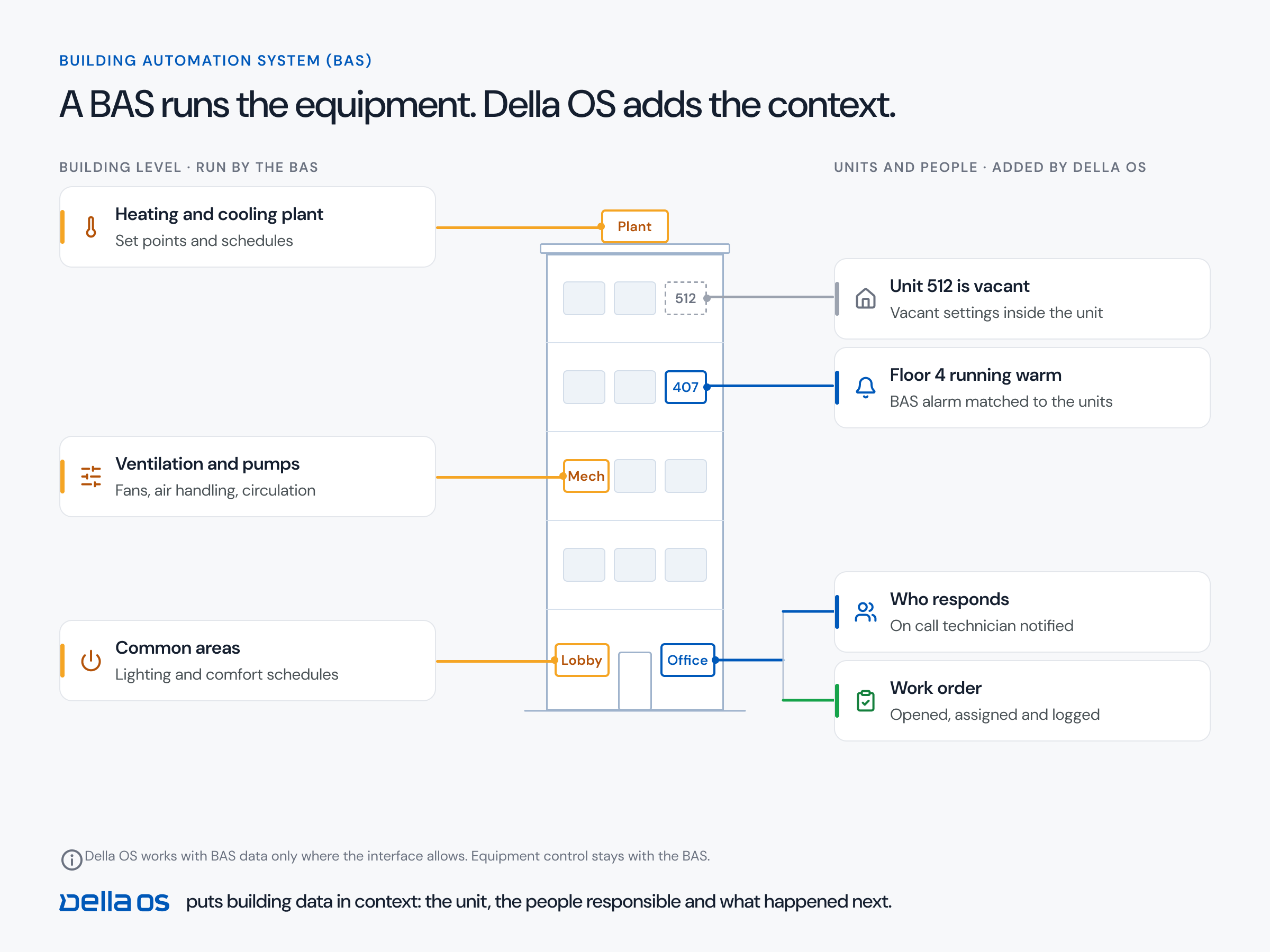
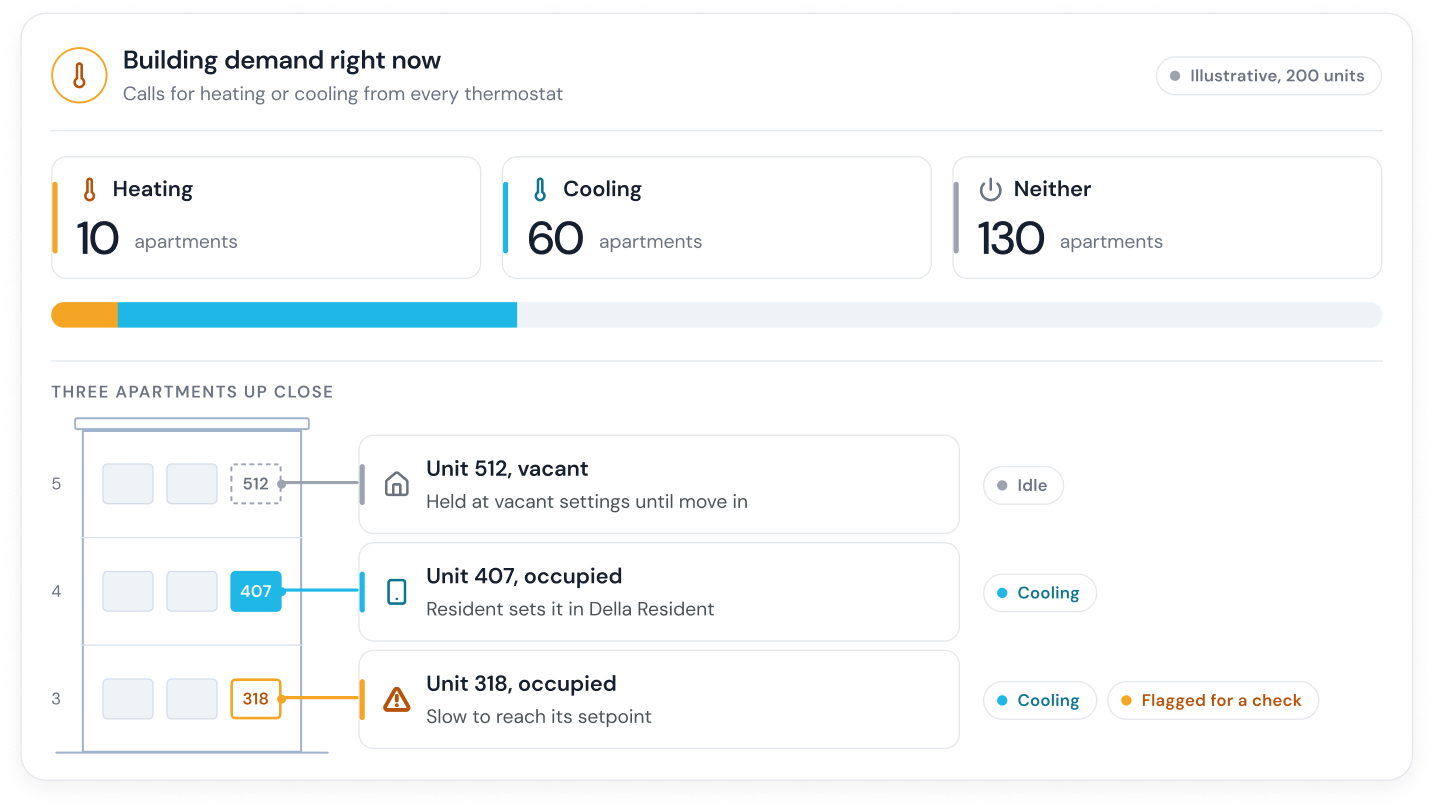
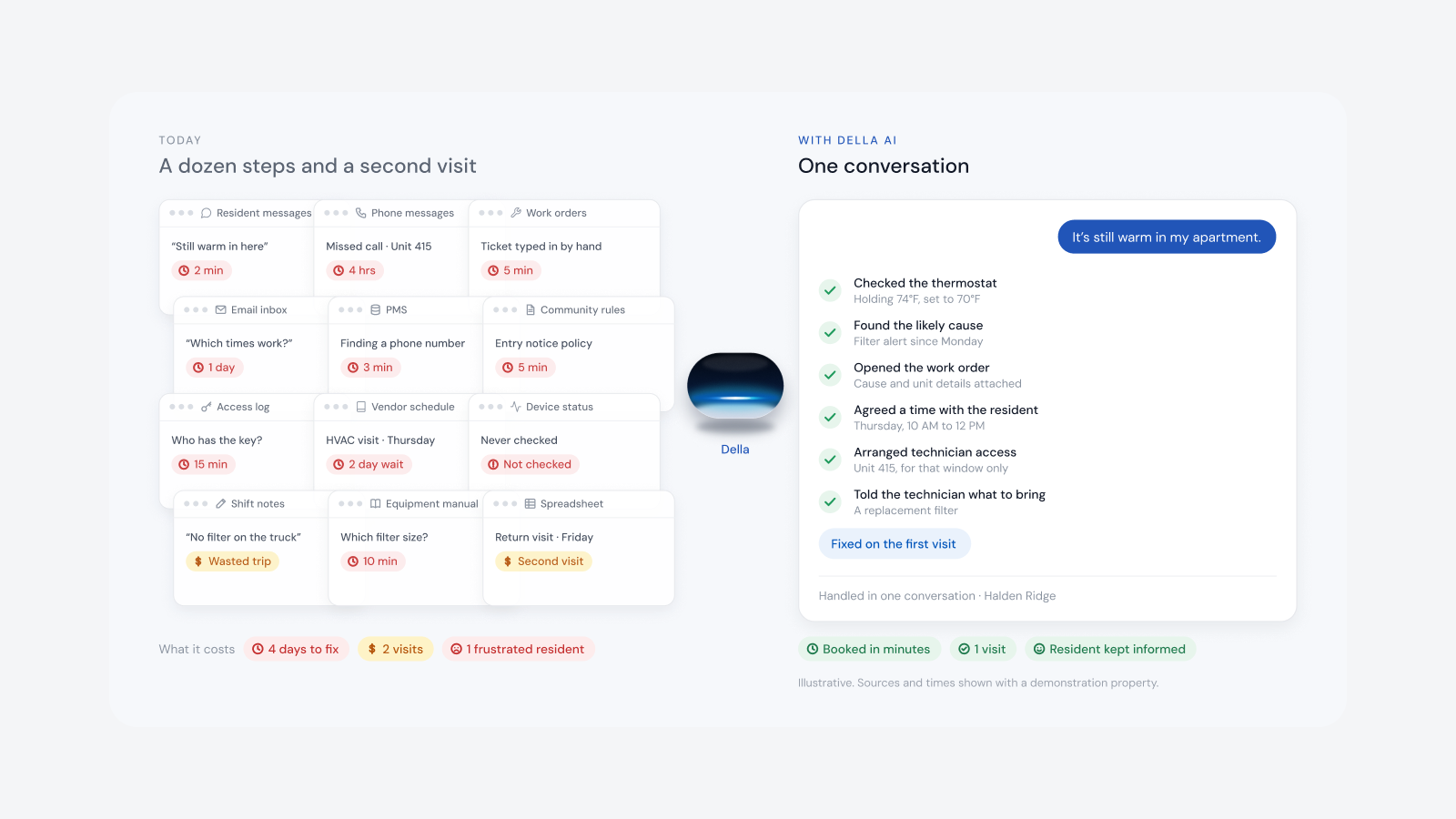
Della OS is the smart building operating system for multifamily and residential properties, from apartments and student housing to senior living and condominiums. It brings supported leak alerts into the property team's daily operations and routes them based on occupancy. The property sets the alert strategy in Della: in an occupied unit, the alert can go to the resident first and to staff if the resident doesn't respond, or to the resident and staff at the same time. In a vacant unit, it goes straight to staff. Every alert arrives tied to the right unit, so the people responding know exactly where to go, and a leak can open a maintenance ticket for staff to act on.
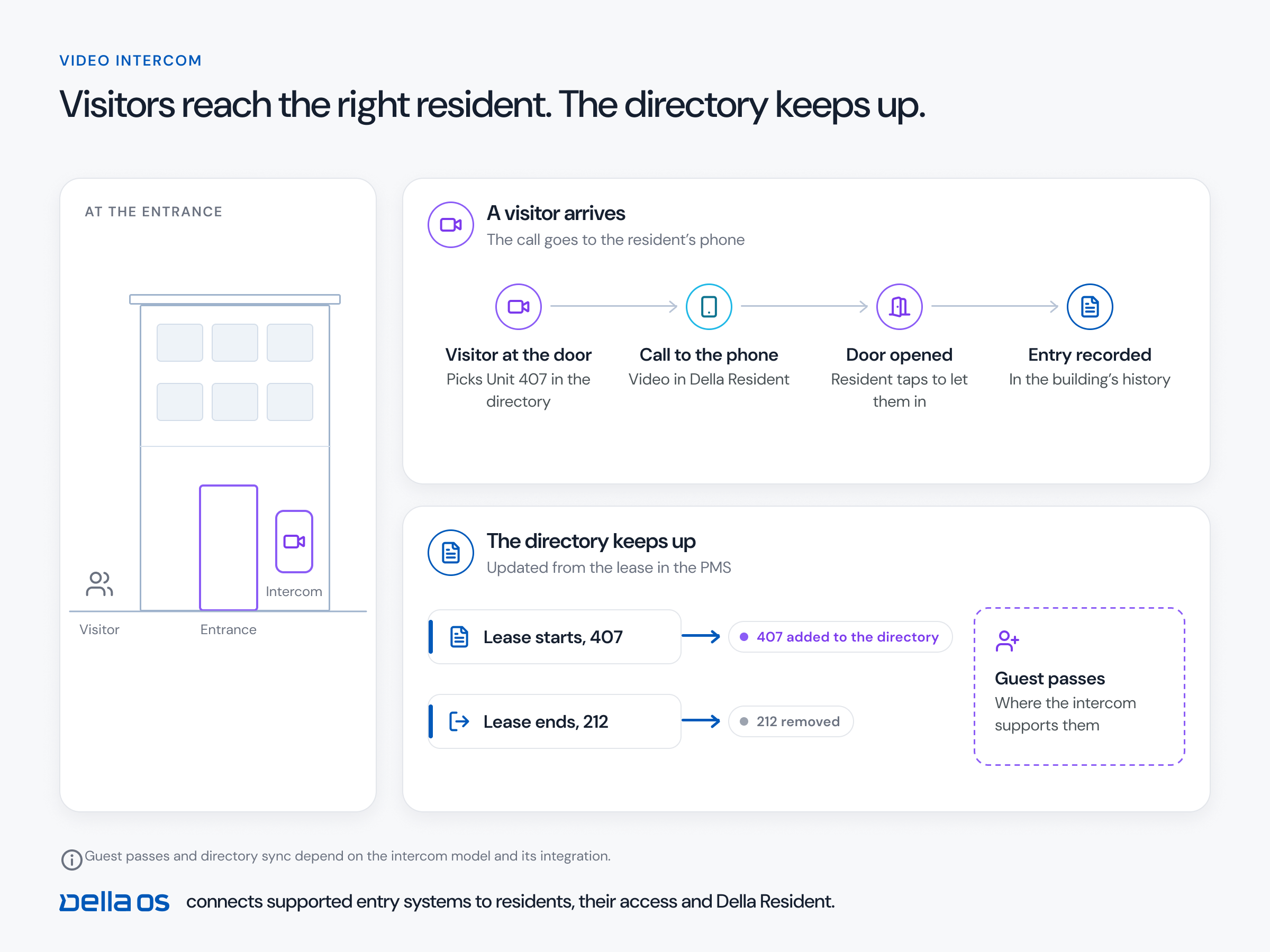
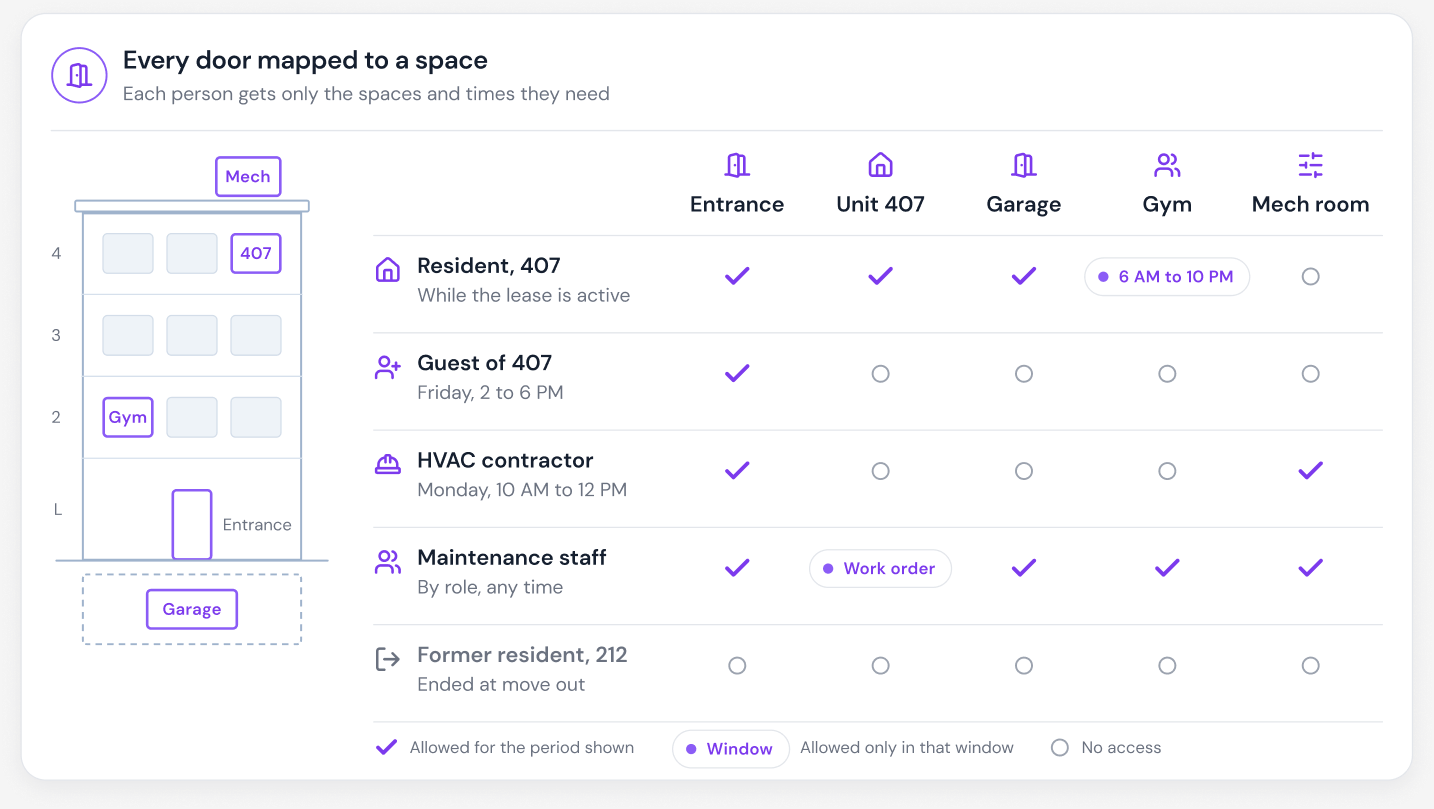
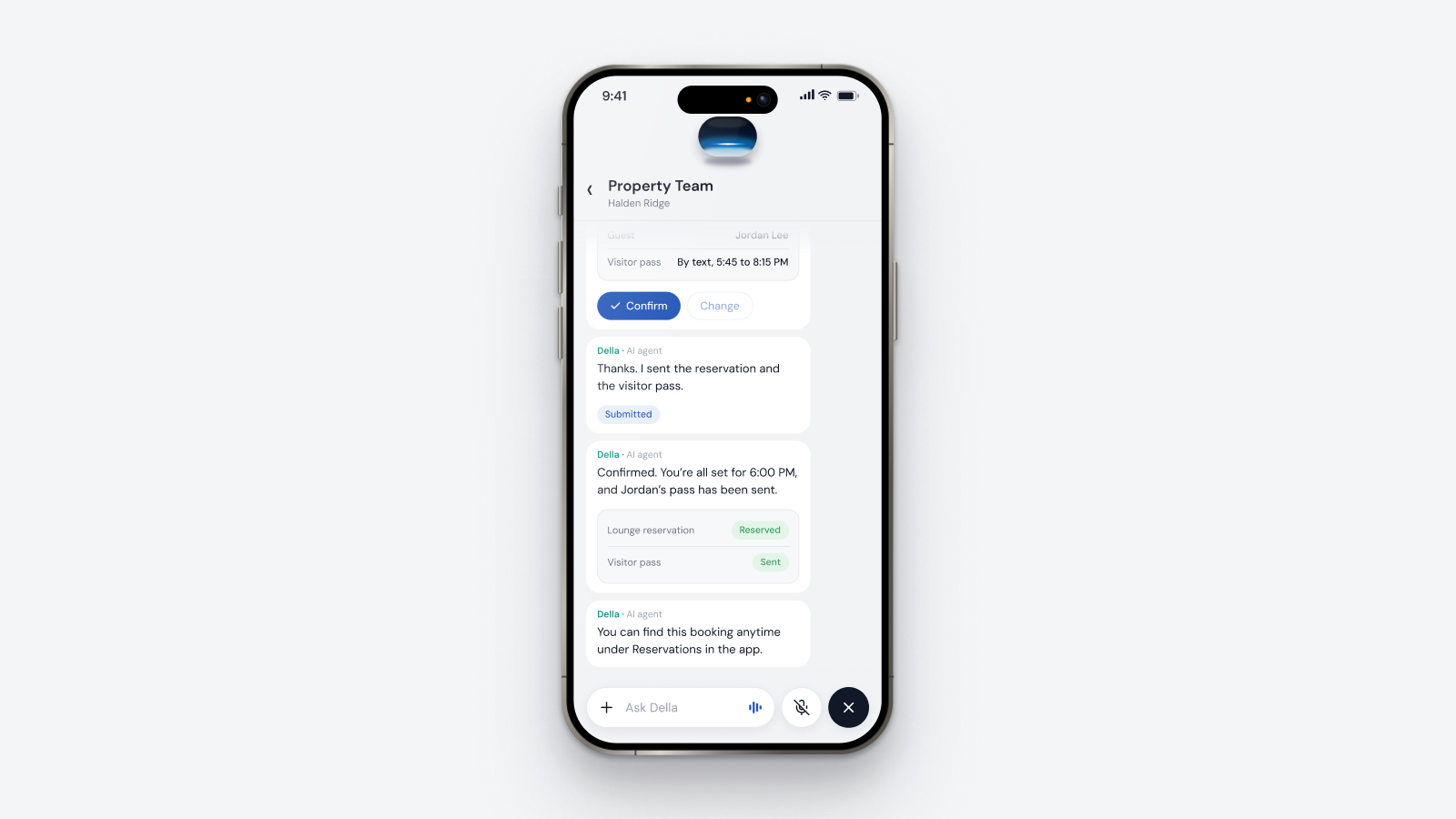
Della OS also has workflows to issue a key to the unit for the person responding. In a vacant unit, staff can always get in. In an occupied unit where nobody is home, access follows what the lease or condominium documents allow. Where a compatible valve is installed, water can be shut off automatically or by staff from Della.
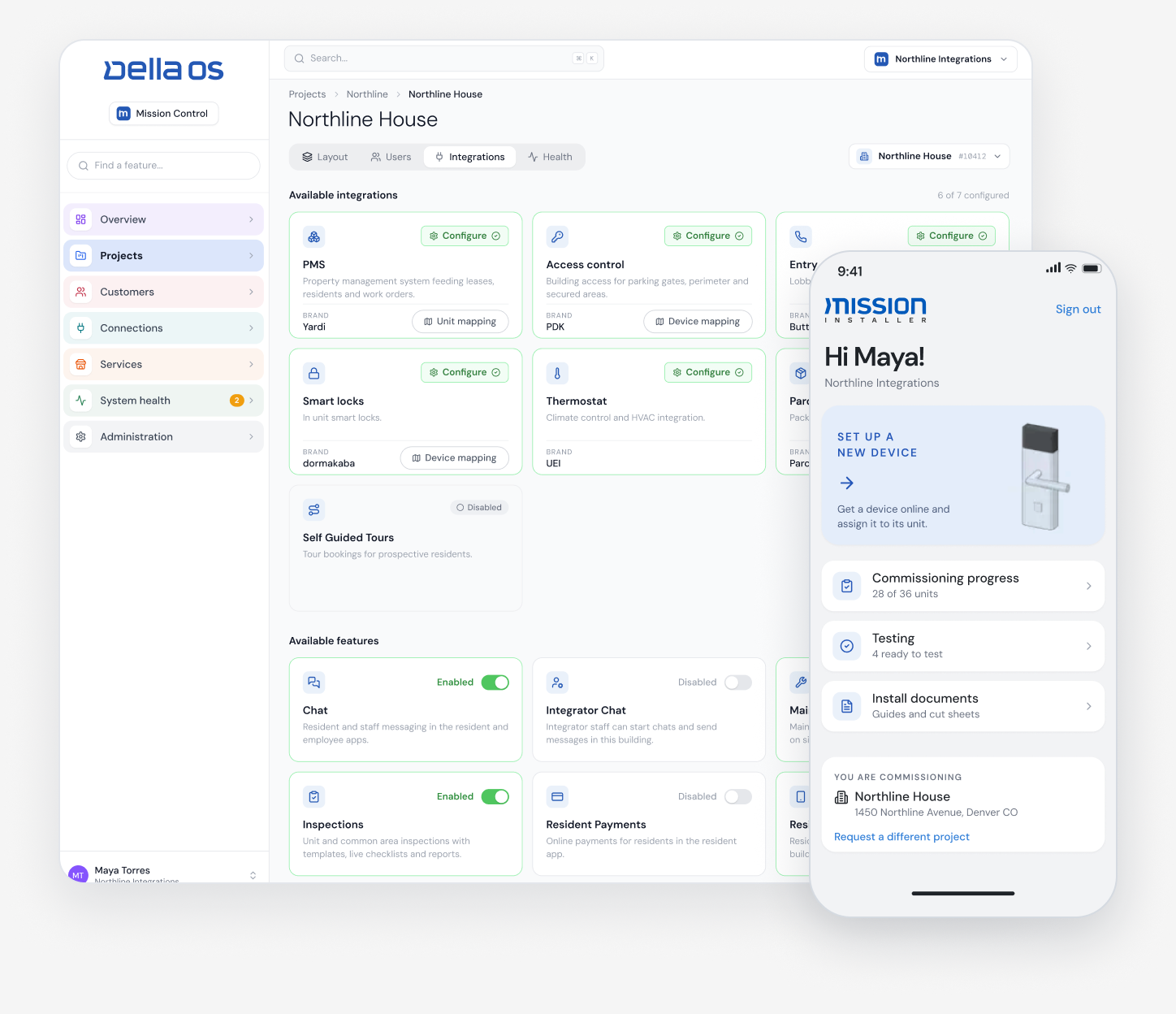
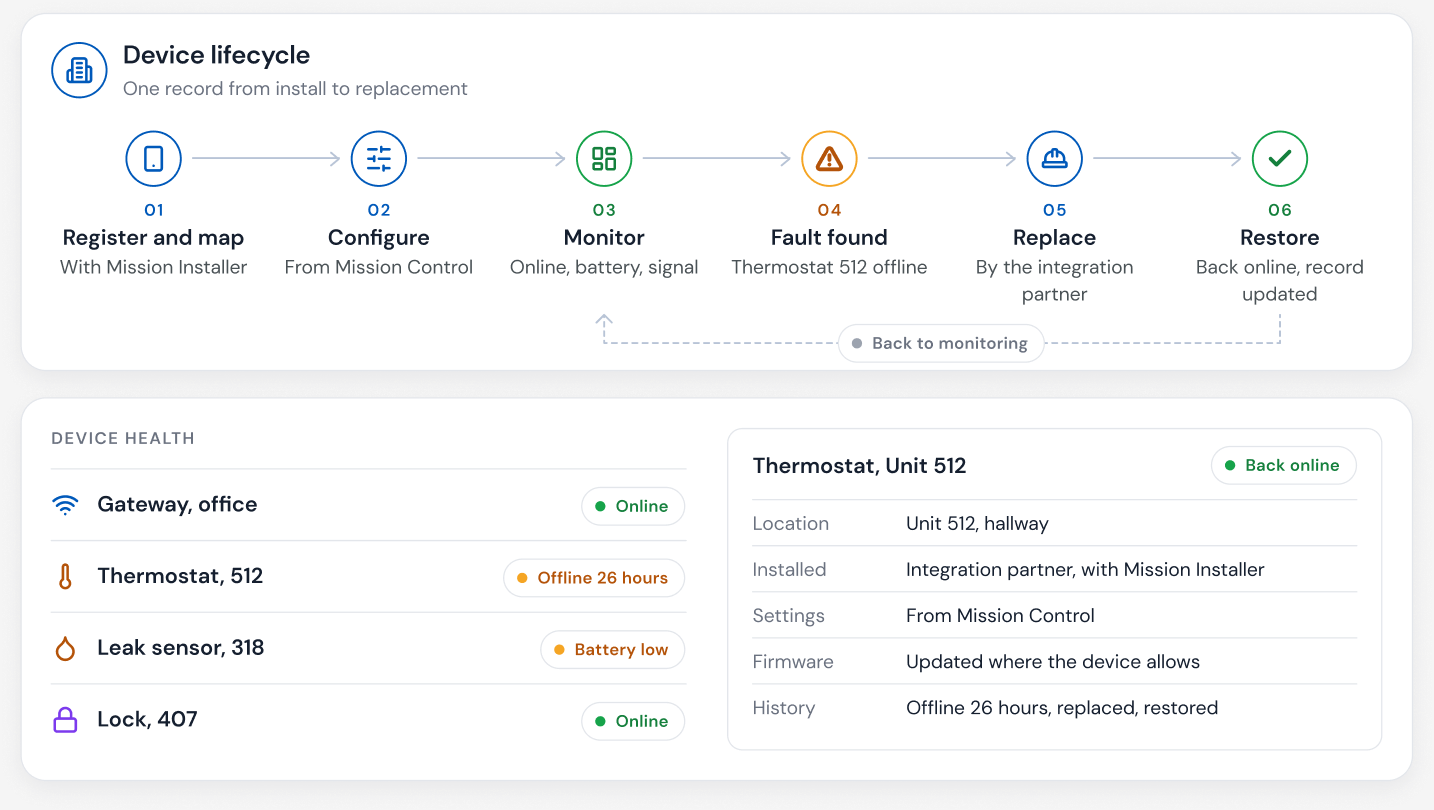
Della OS automatically monitors every connected device, so a leak sensor with a low battery or one that stops reporting is flagged on the dashboard instead of failing quietly. Della OS works with Zigbee and Z-Wave devices through a hub, and compatibility is confirmed model by model.
Frequently asked questions
Where should leak sensors go in an apartment?
Under sinks, behind toilets and washing machines, beside water heaters and near HVAC equipment, plus mechanical rooms and risers in common areas.
Who gets the leak alert first?
That's a setting in Della. In an occupied unit, the alert can go to the resident first and then to staff if there's no response, or to both at the same time. In a vacant unit, it goes straight to staff.
How do staff get into the unit if nobody is home?
Della OS can issue a key to the unit for the responder. Staff can always enter a vacant unit; in an occupied unit, entry follows what the lease or condominium documents allow.
Can water be shut off automatically?
Yes, where a compatible valve is installed. Water can be shut off automatically or by staff from Della.
What if a sensor's battery dies?
Della OS monitors every connected device, so a sensor with a low battery or one that stops reporting is flagged on the dashboard.
Do leak sensors need Wi-Fi?
Not always. Many sensors connect through a hub, and Della OS works with Zigbee and Z-Wave devices through a hub.
Can leak detection lower insurance costs?
Some insurers ask about or reward water mitigation. Check with your carrier before you count on it.
Read about leak detection, how to protect vacant units and how smart building software lowers operating costs, or book a walkthrough.