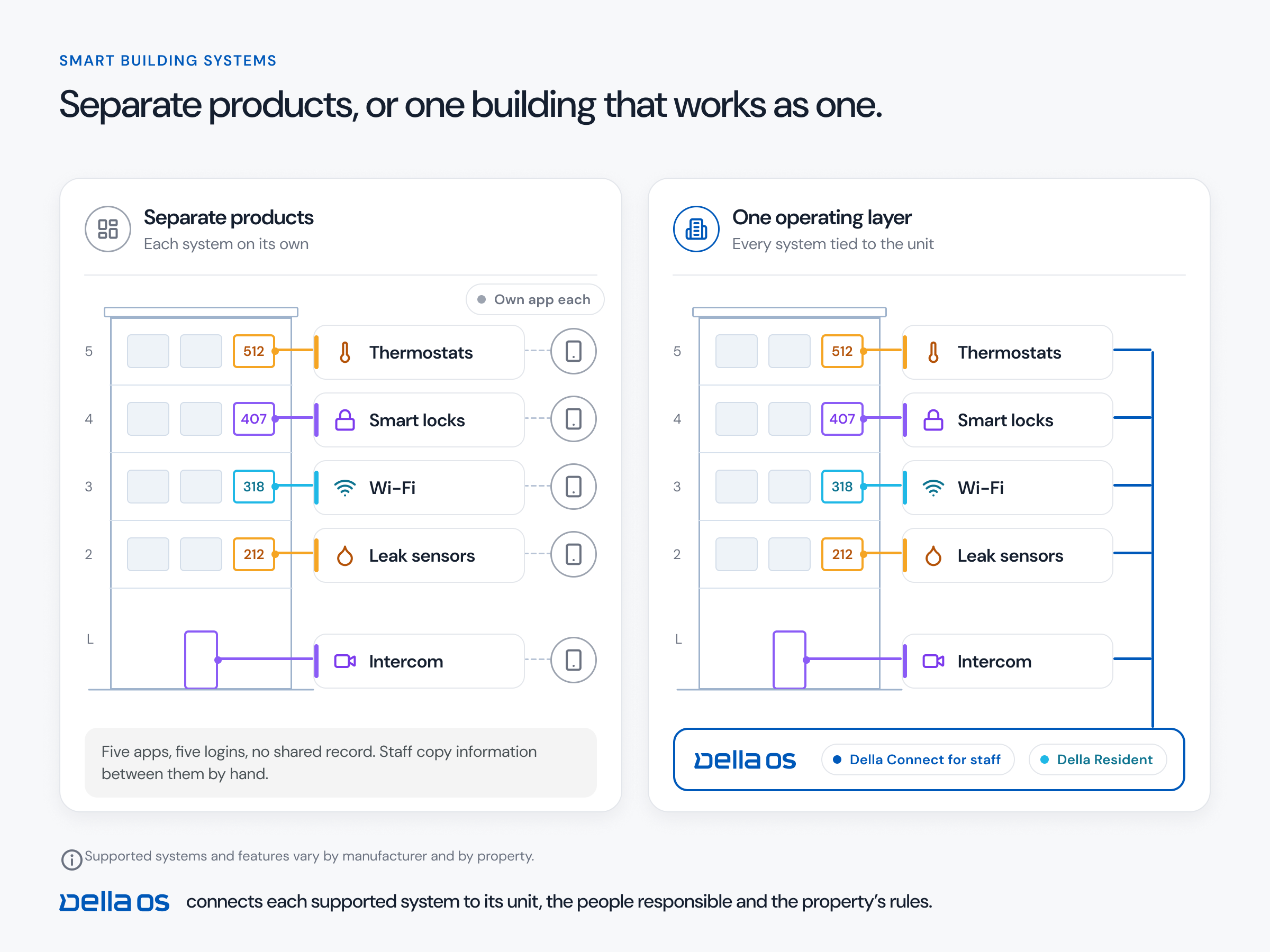
The short answer: a building automation system (BAS) runs a building's central mechanical equipment. A smart apartment platform connects devices inside units, such as locks and thermostats, to residents and staff. A building operating system sits above both: it takes lease and occupancy events from the property management system (PMS) and turns them into coordinated actions across access, devices, networks, maintenance, services and people, the same way at every property. Where a building has a BAS, a building operating system can make it far more effective, and in some buildings it reduces how much BAS is needed at all.
The three, side by side
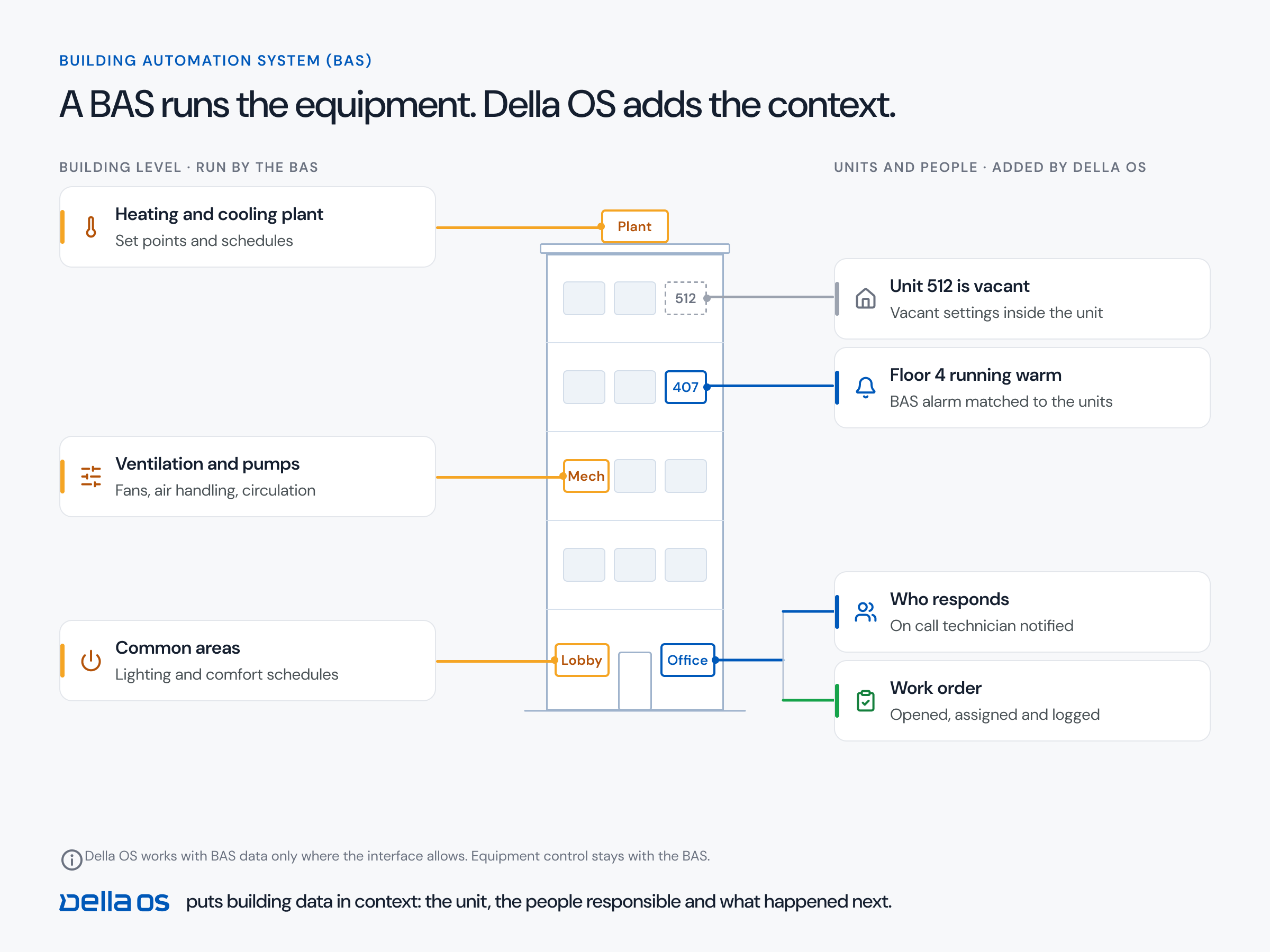
- Building automation system. Runs boilers, chillers, air handlers, ventilation and common area lighting to schedules and setpoints. It's base building infrastructure, built for the plant, not for residents or leases.
- Smart apartment platform. Connects devices inside units, such as smart locks, thermostats and sensors, to an app for residents and a dashboard for staff.
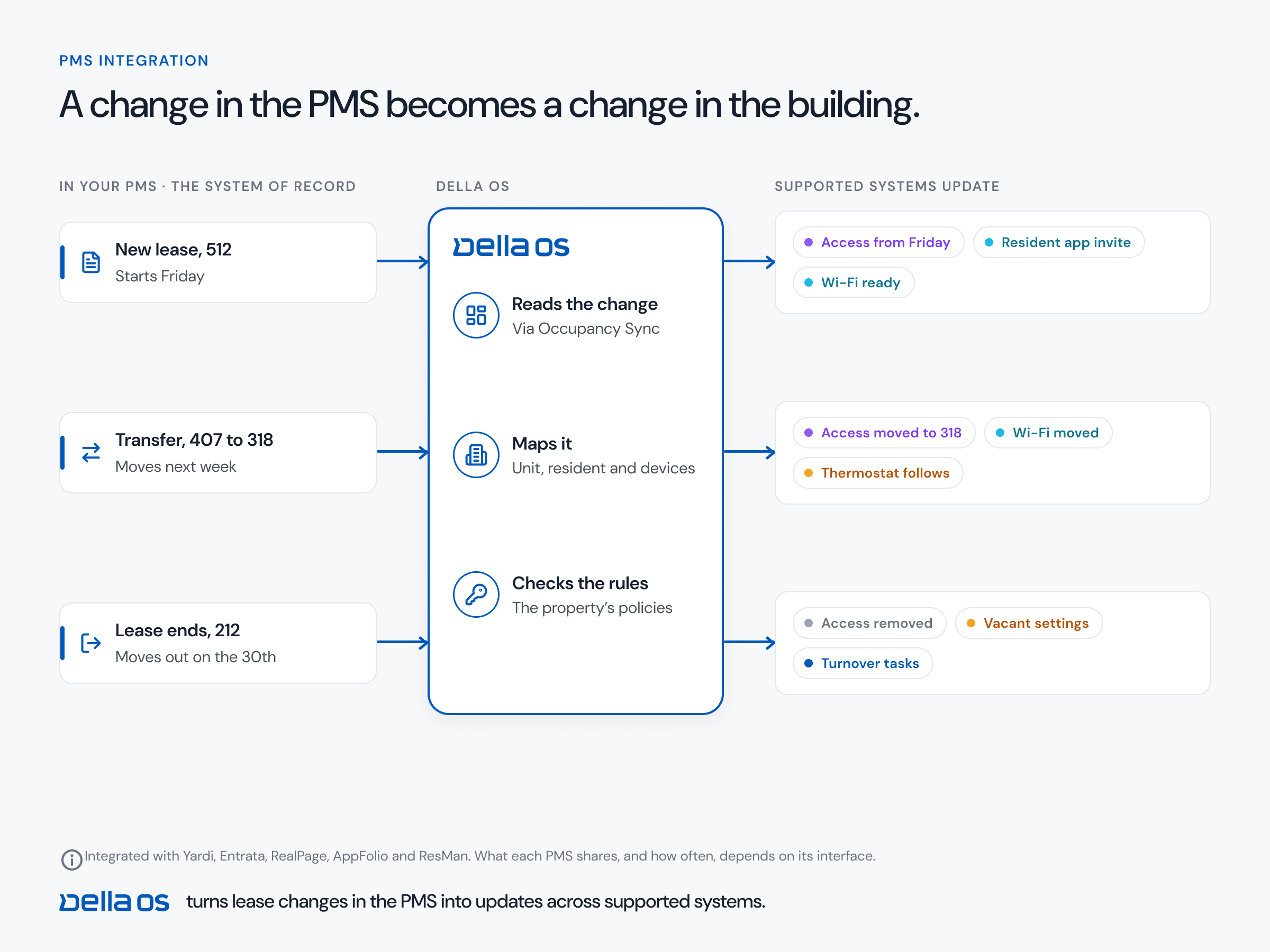
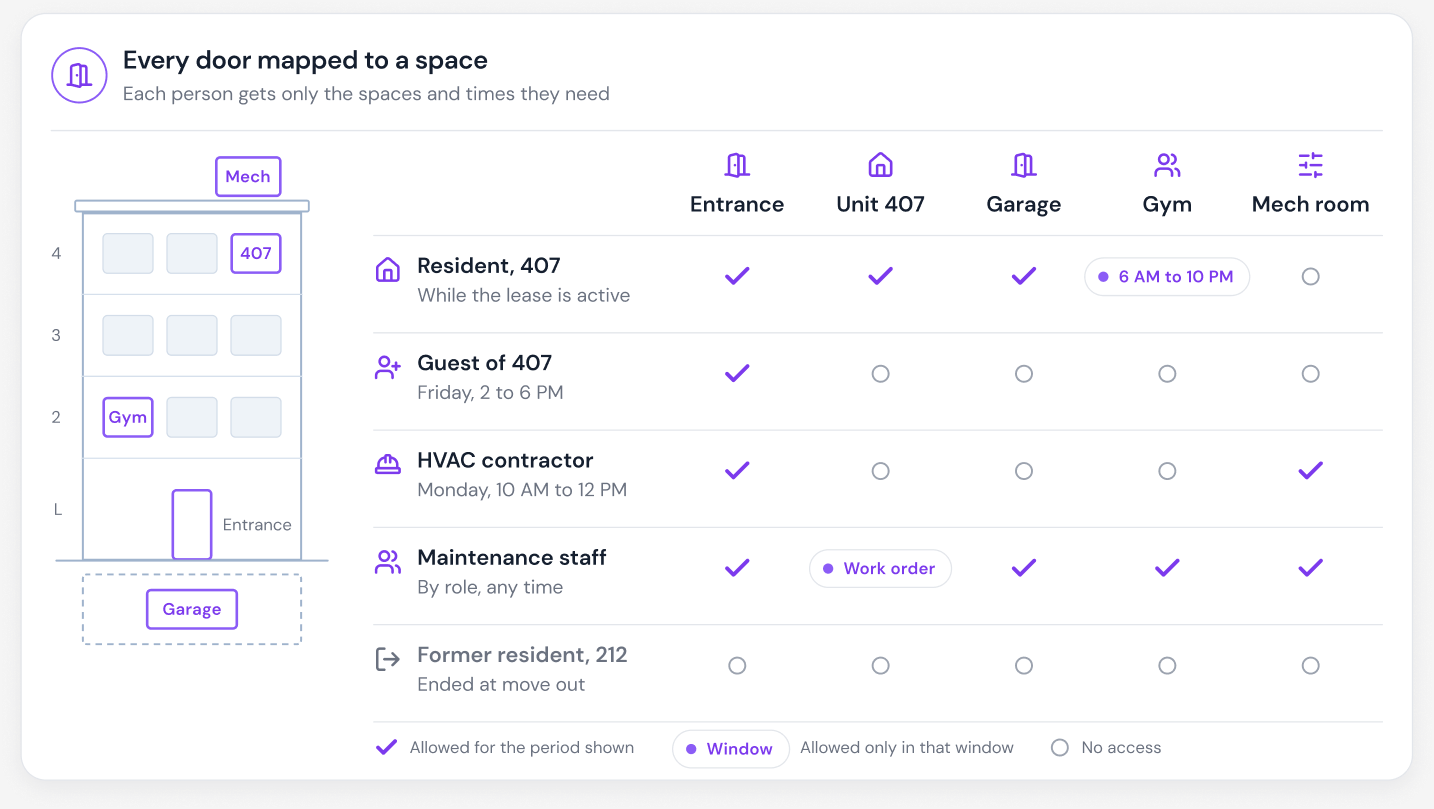
- Building operating system. Coordinates the whole property. It knows who lives where from the PMS, which doors and devices belong to each unit and space, and what each person is allowed to do, and it turns one event into every action that should follow.
What a BAS really is, and isn't
A BAS is a major infrastructure investment that can run into millions of dollars. It is usually installed for central plant control and energy goals, and it lives behind the walls: residents never see it, and property teams rarely use it day to day. It's strong at running equipment and producing infrastructure analytics, but it isn't a property management tool. It doesn't know about leases, residents, move ins, maintenance requests or the experience of living in the building.
How a building operating system makes a BAS better
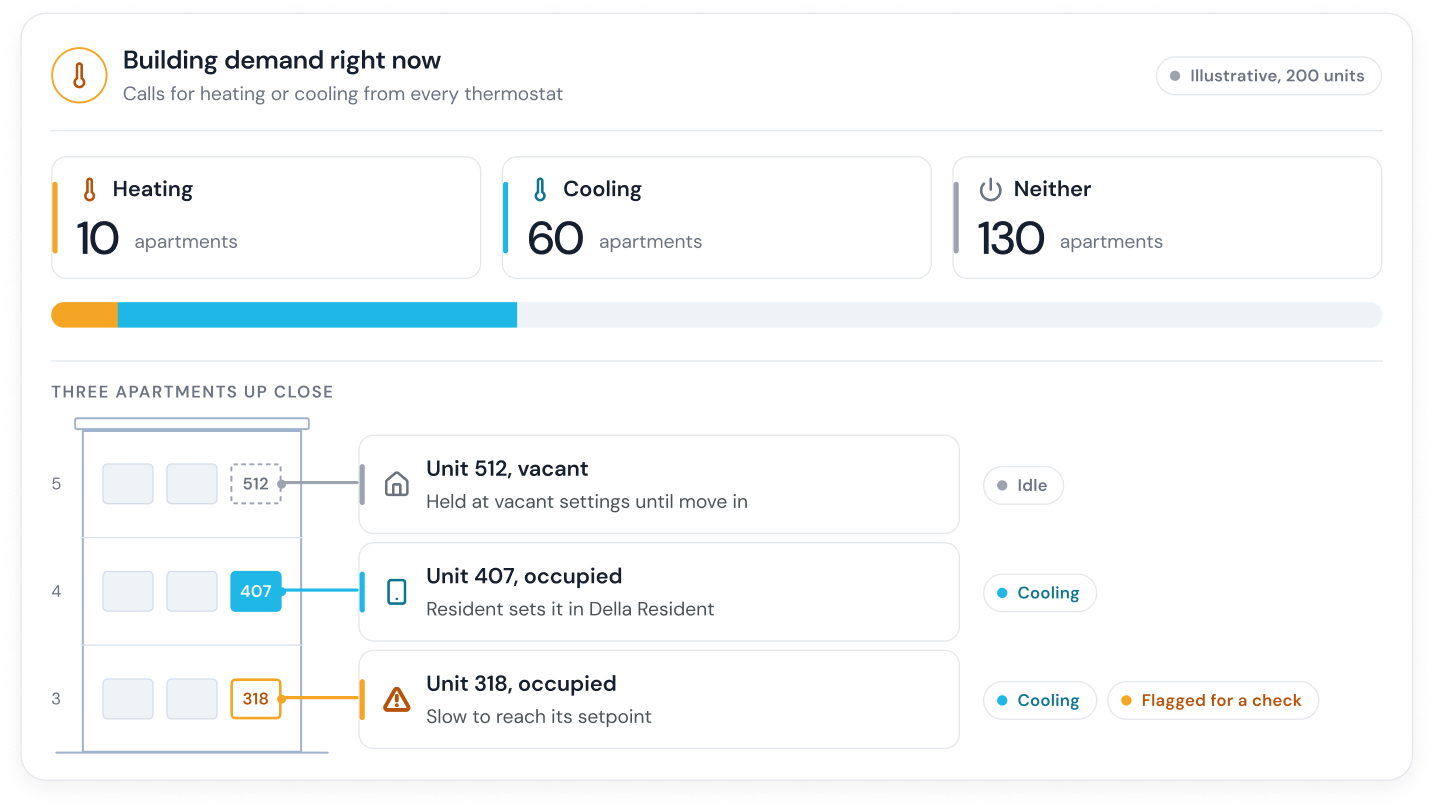
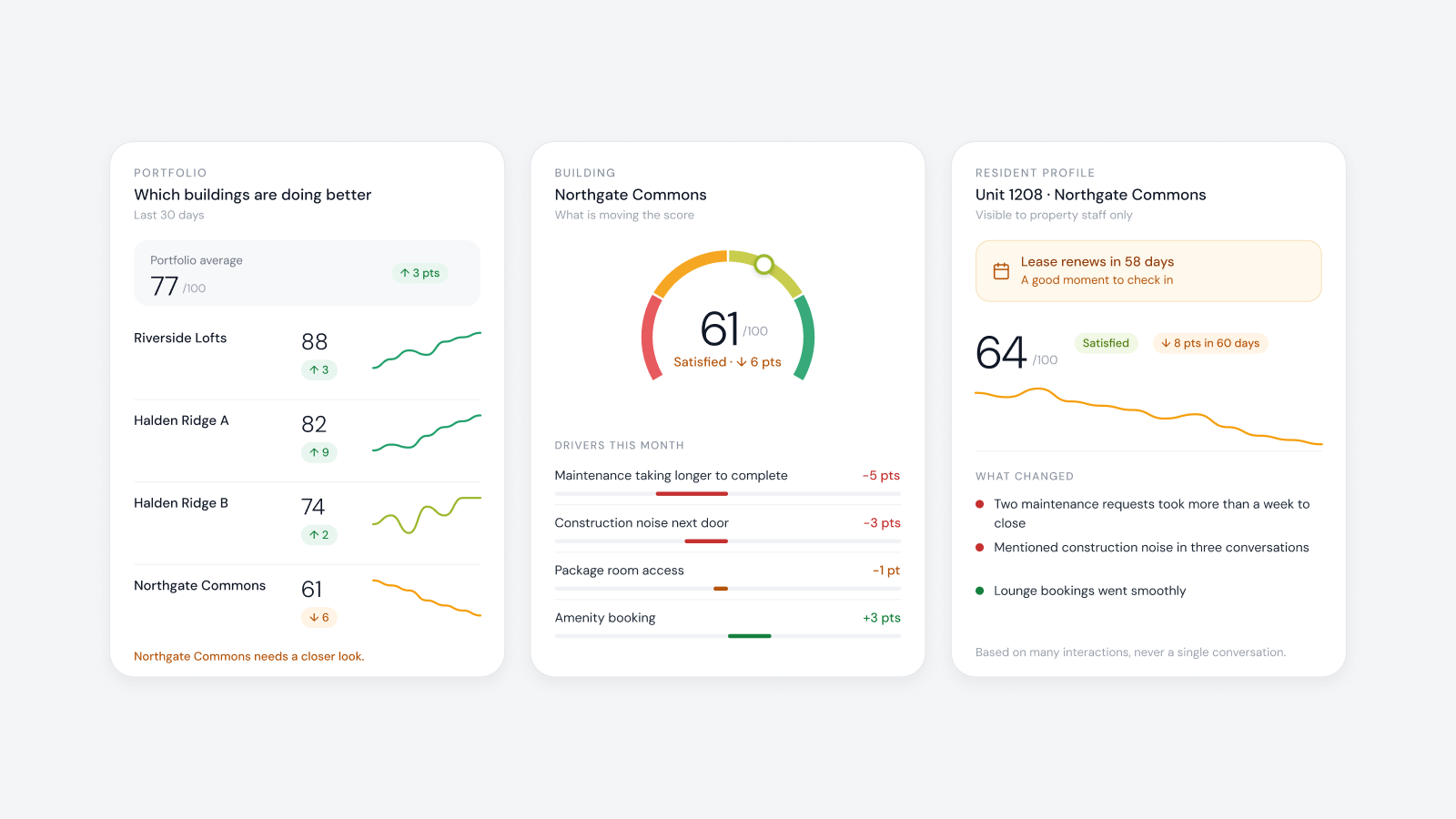
A BAS typically sees the building at the level of floors, zones and equipment. A building operating system sees each unit: the actual temperature in Unit 1103, what the resident has set, whether the unit is occupied or vacant and how it is normally used. Passing that unit level picture to the BAS gives it a clarity and resolution it has never had, so central equipment can respond to real demand, unit by unit, including demand response events, instead of running to broad schedules. The BAS keeps doing what it does well; it just does it with far better information.
When you need less BAS
Because a building operating system handles so much at the unit level, such as thermostat settings, vacant unit energy, leak detection and comfort alerts, some buildings find they need a smaller BAS, or none beyond the central plant. That's worth weighing before committing to a large BAS project, especially in new construction.
What a building operating system does
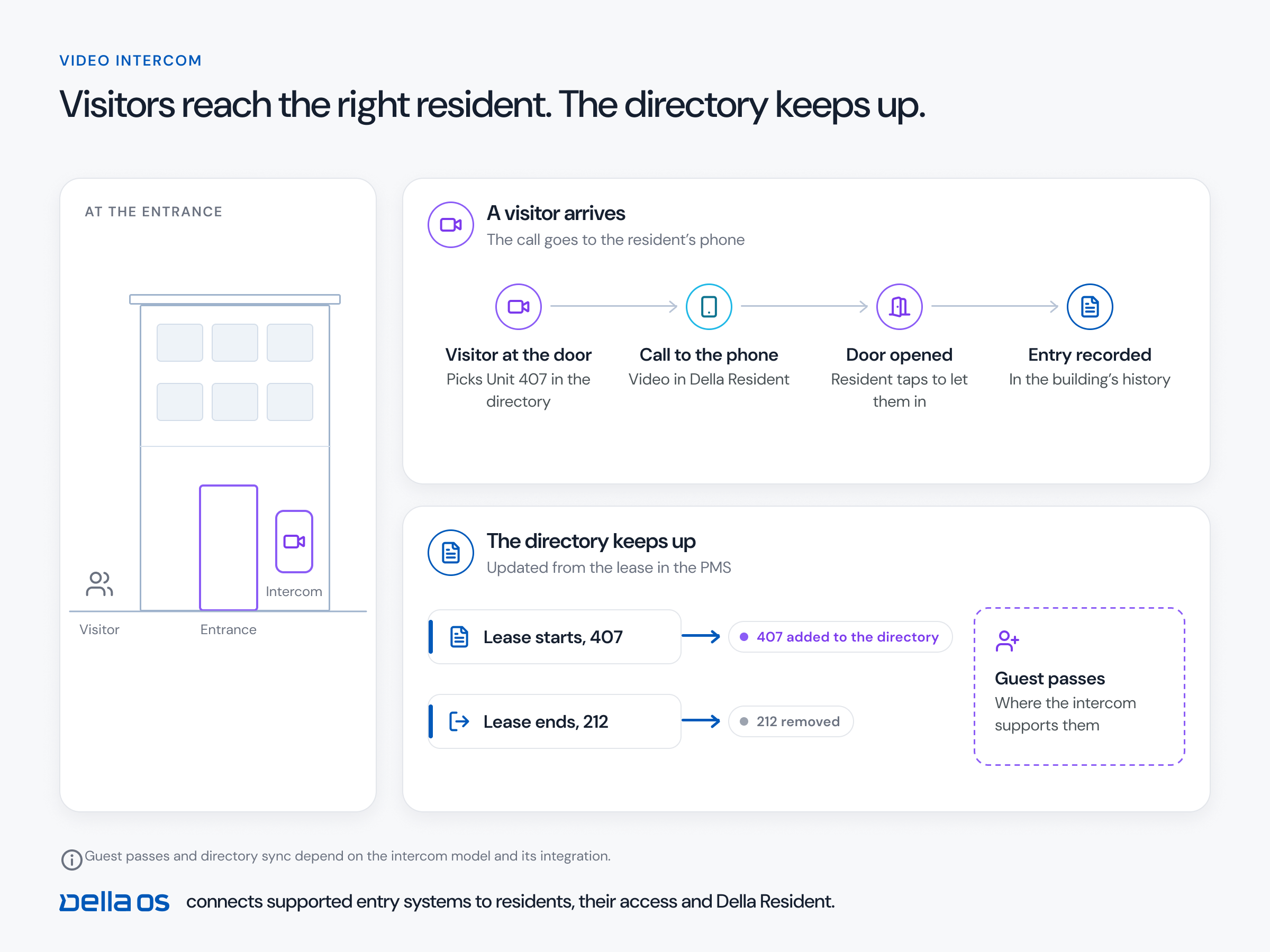
- Takes events from the PMS. Move in, transfer, move out or a renewal.
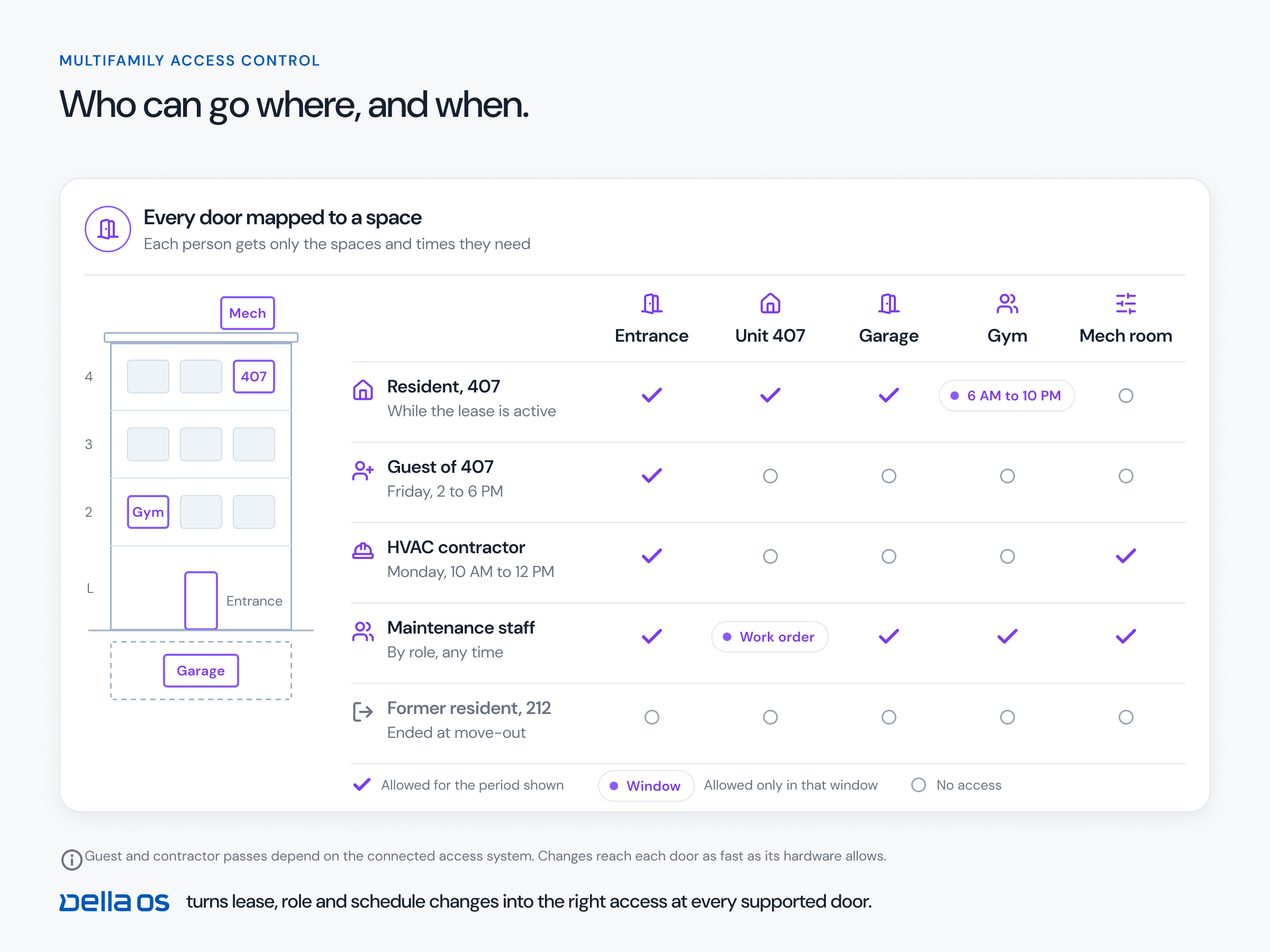
- Keeps one identity per person. Residents, guests, staff and vendors, each with permissions by role.
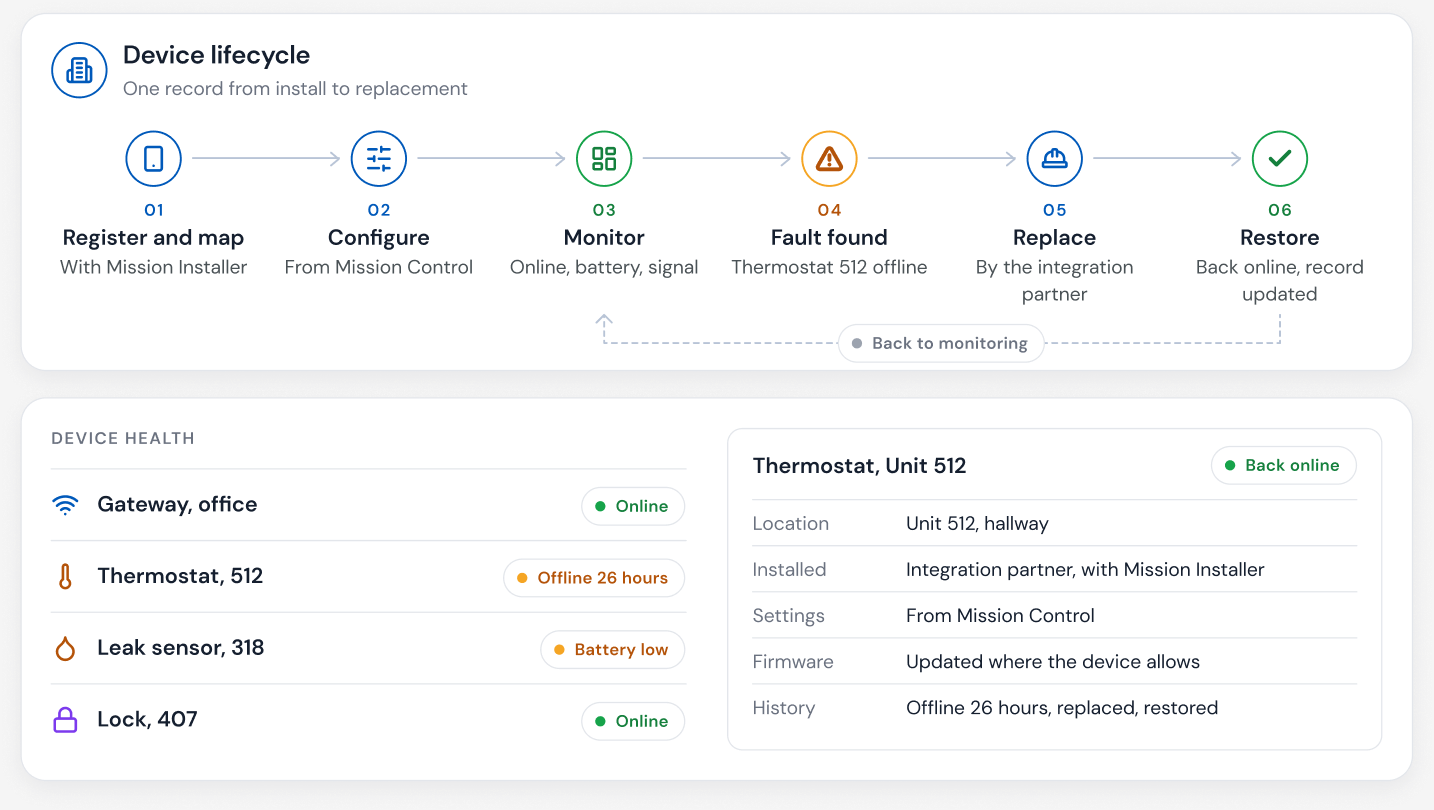
- Maps the building. Units, spaces, doors and devices, so a change reaches the right equipment.
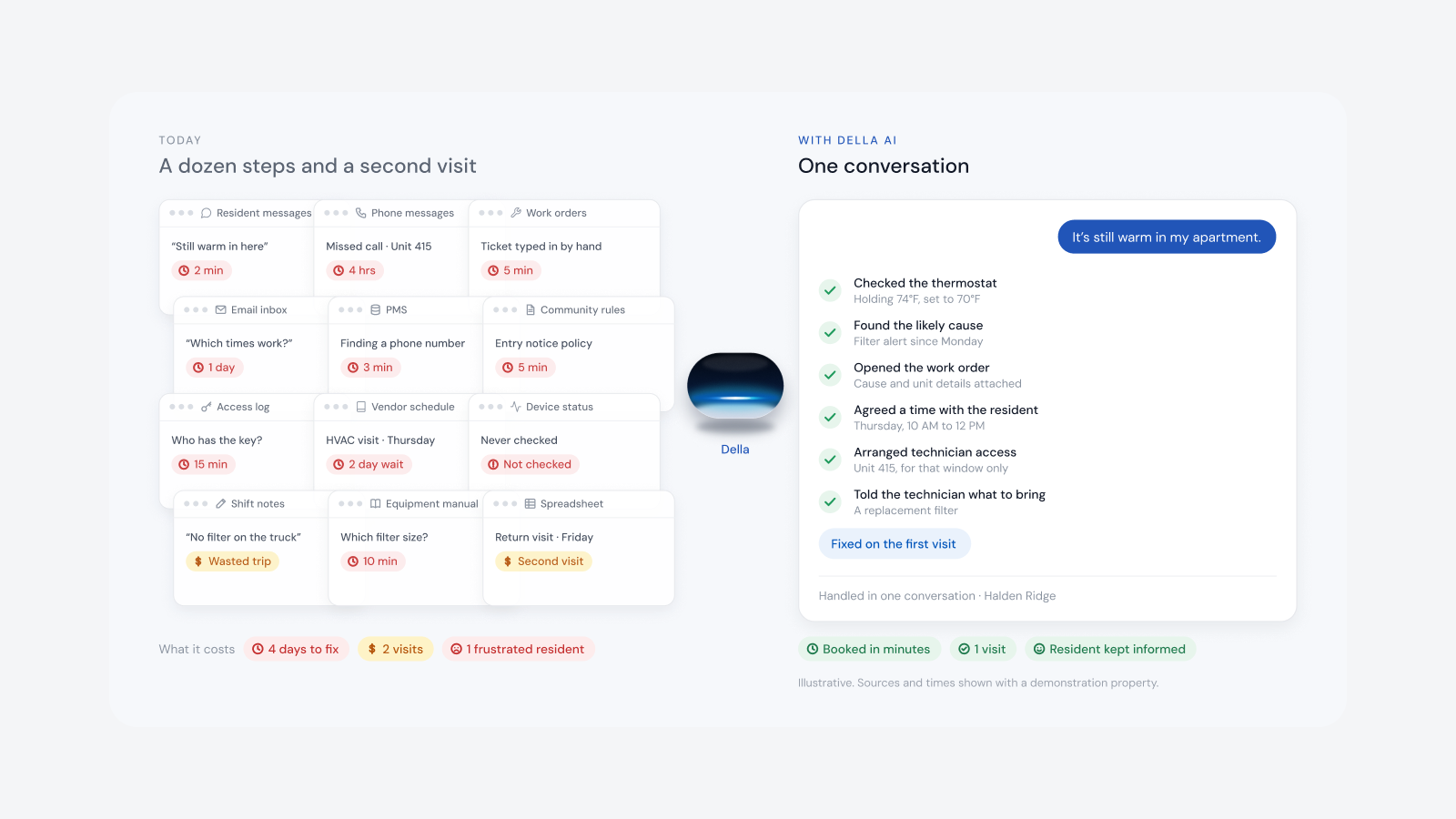
- Runs the workflow. One event becomes access, Wi-Fi, unit settings, services, messages and work orders, with an audit trail.
- Confirms the result. It checks that each action actually happened in the building.
- Works across brands. A door is a door whichever lock opens it, so one standard runs across buildings with different hardware.
Integration is not the same as interoperability
Many products integrate: they move data from one system to another. A building operating system is about interoperability: an event in one system reliably changes what happens in another, with the right person, permissions, timing and record. When a resident transfers from Unit 1103 to Unit 1507, an integration might update a list. An operating system moves their access, Wi-Fi, parking and services together, ends access to the old unit and starts its turnover.
Which one do you need?
- Central plant to run? A BAS still has a place, and a building operating system will make it smarter.
- Planning a new BAS? Look first at what a building operating system can handle at the unit level; you may need less BAS than you think.
- Several systems, several properties or acquisitions ahead? You need an operating layer, so every building runs the same way whatever hardware it has.
- Staff entering the same information in several places? That's the clearest sign the systems aren't coordinated.
Where Della OS fits
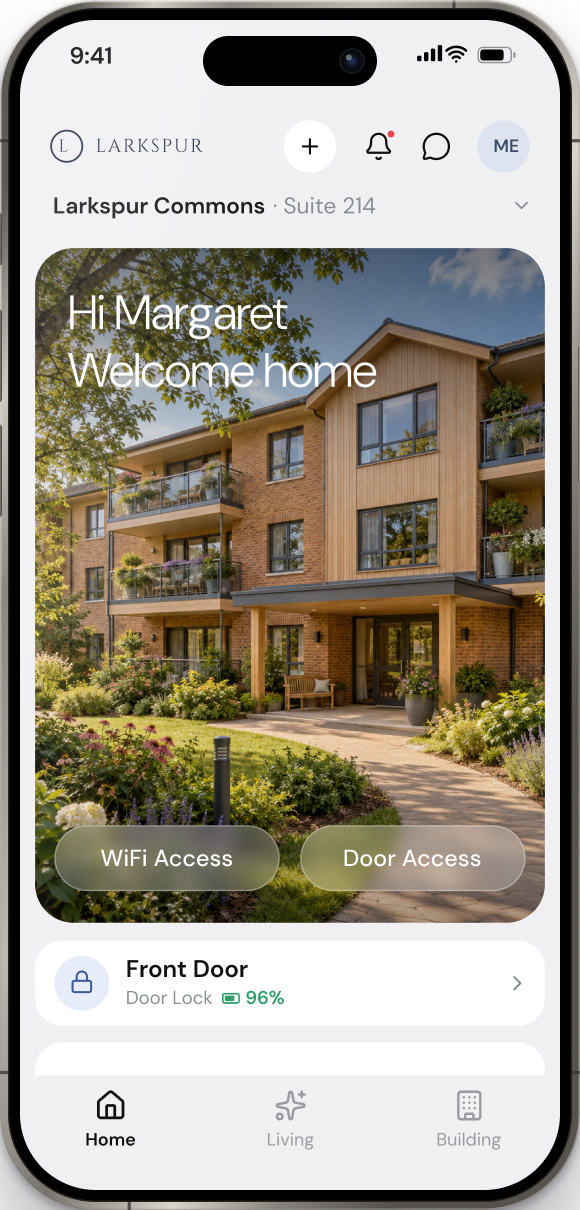
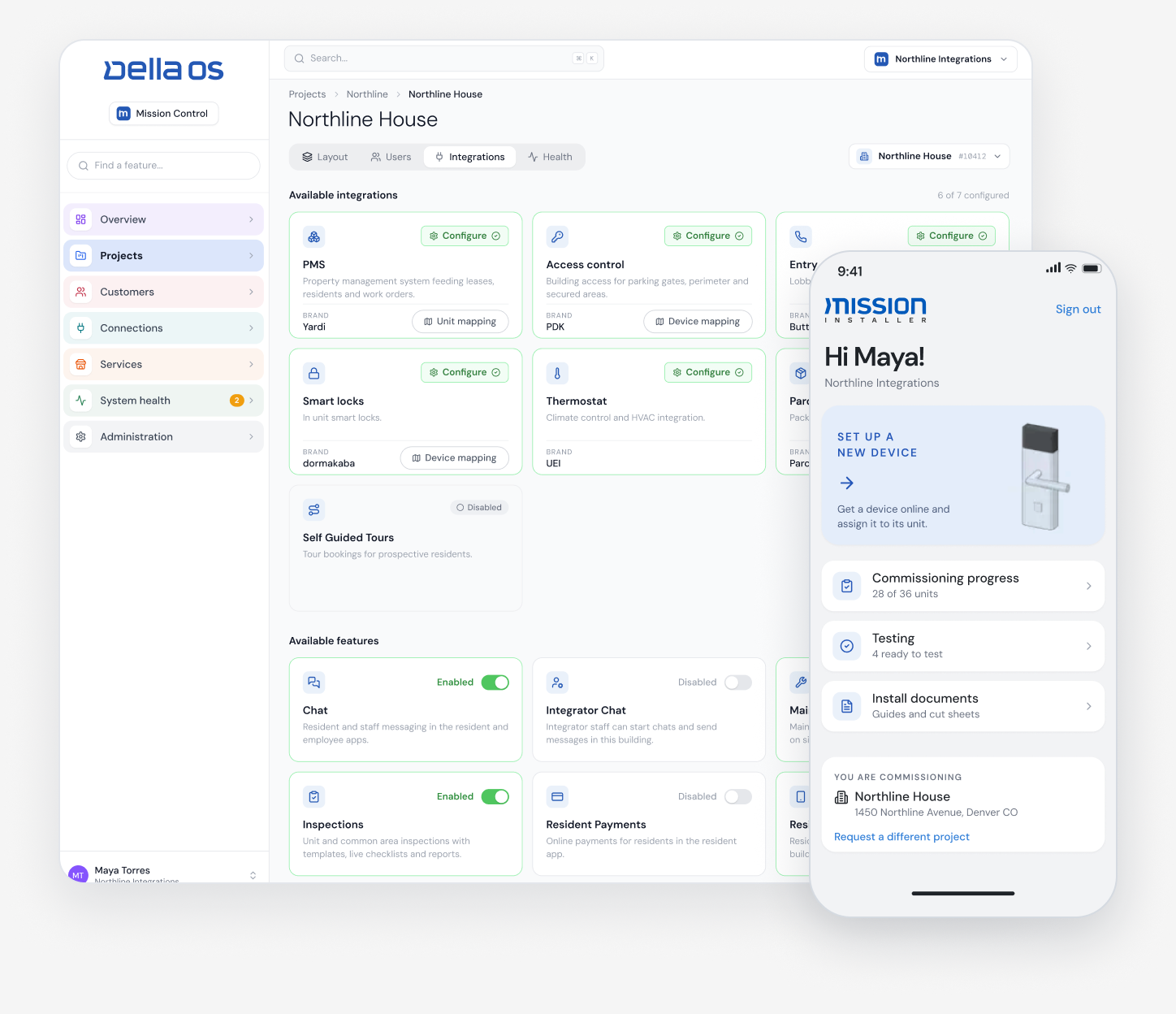
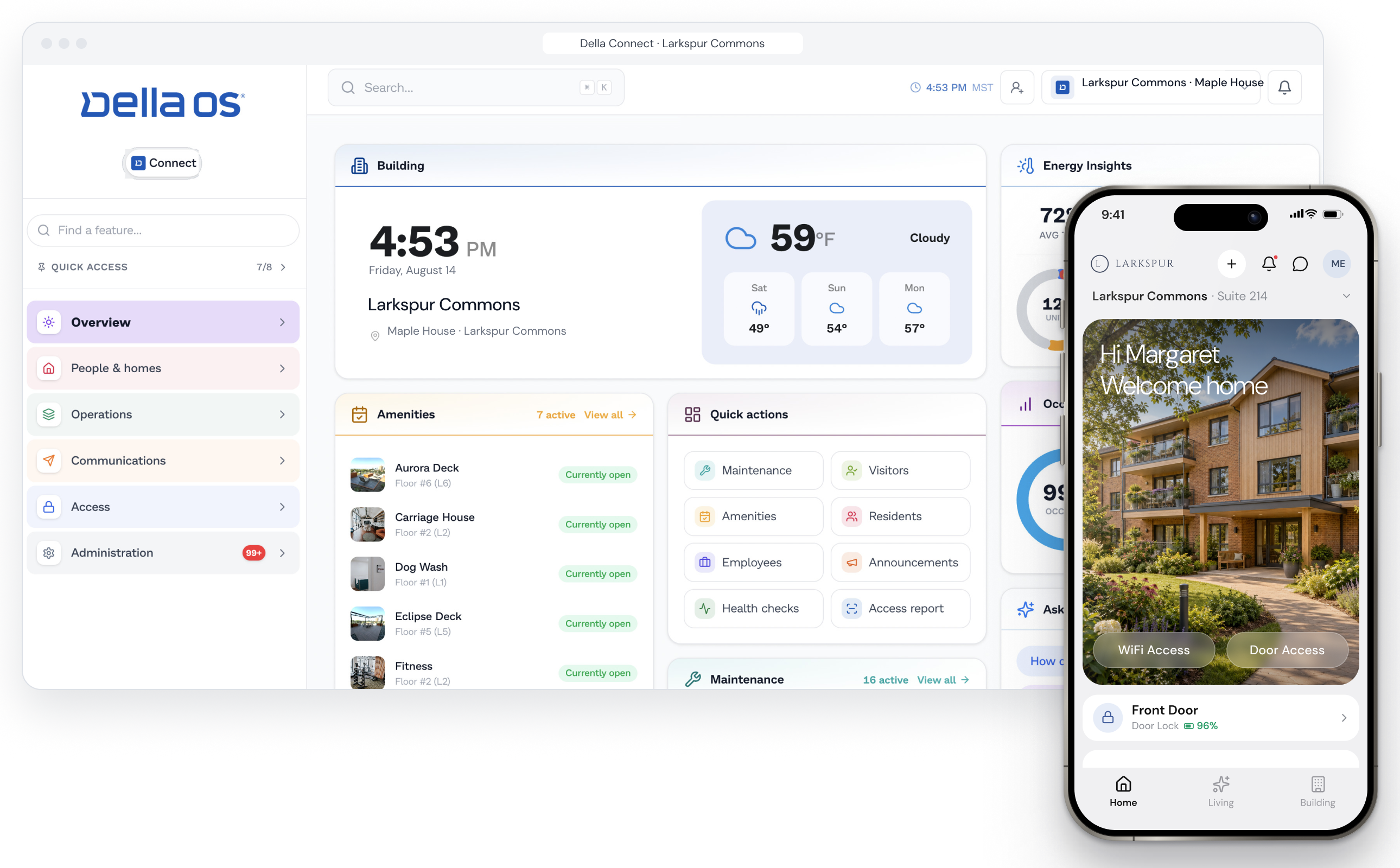
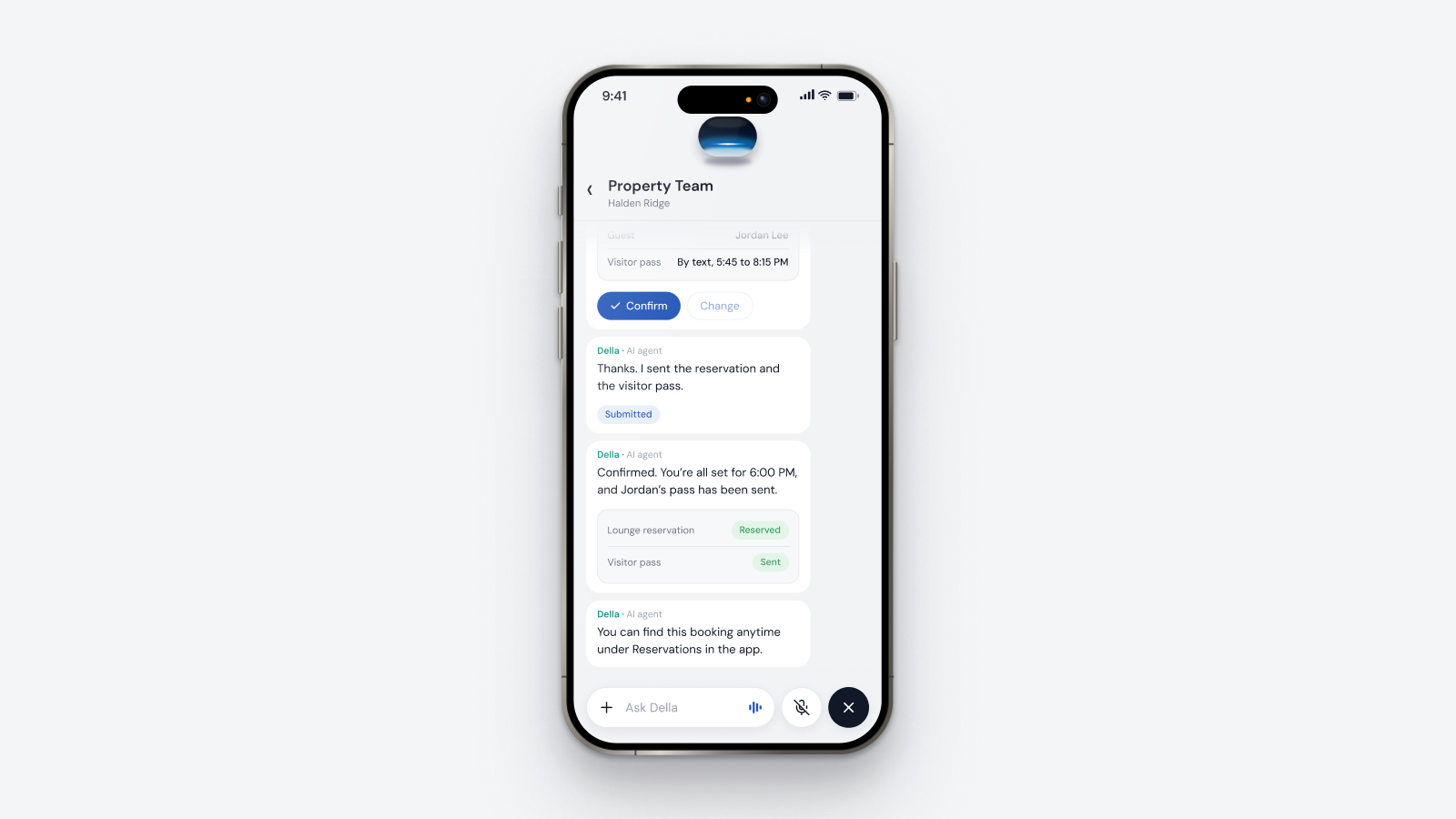
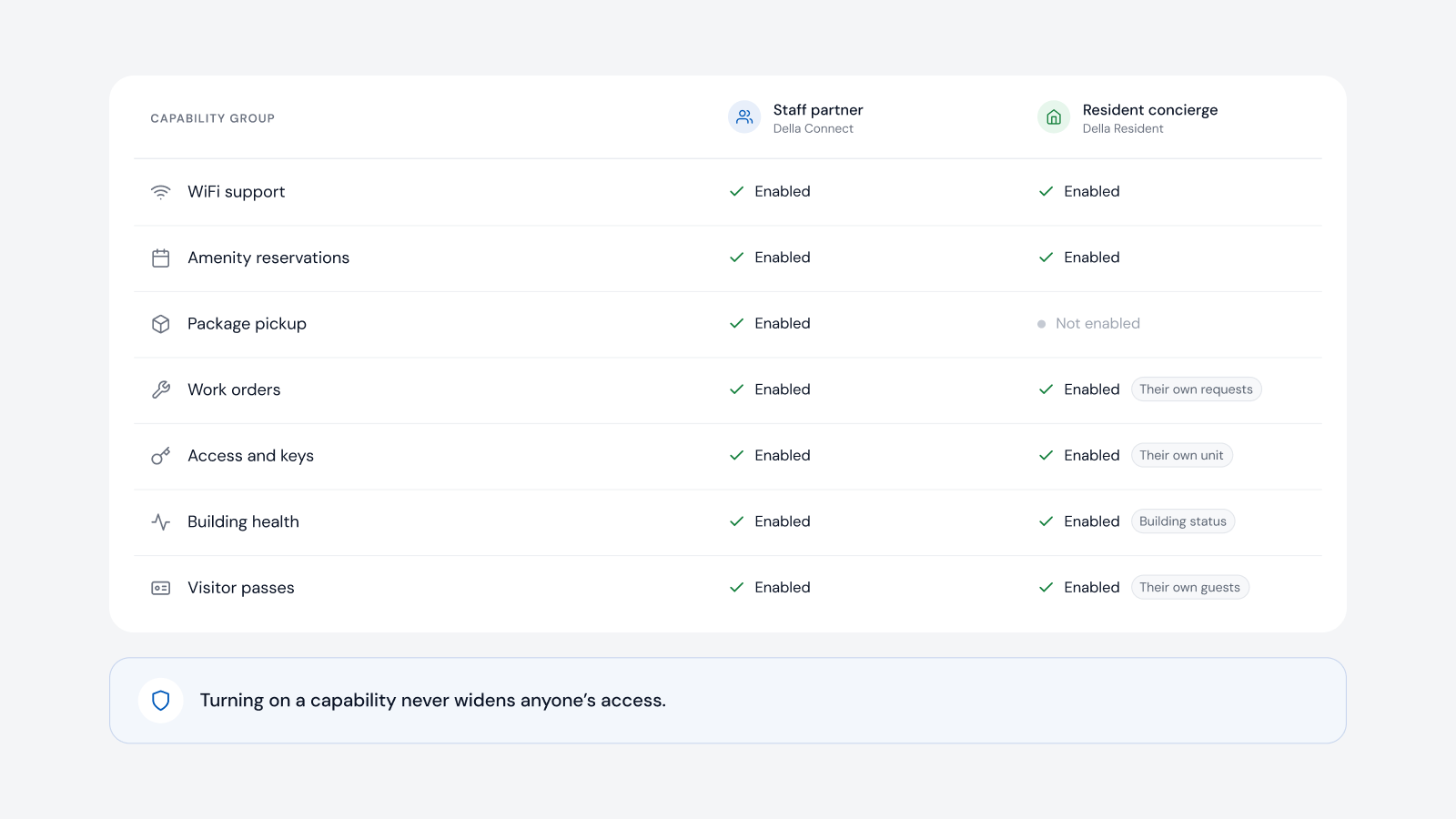
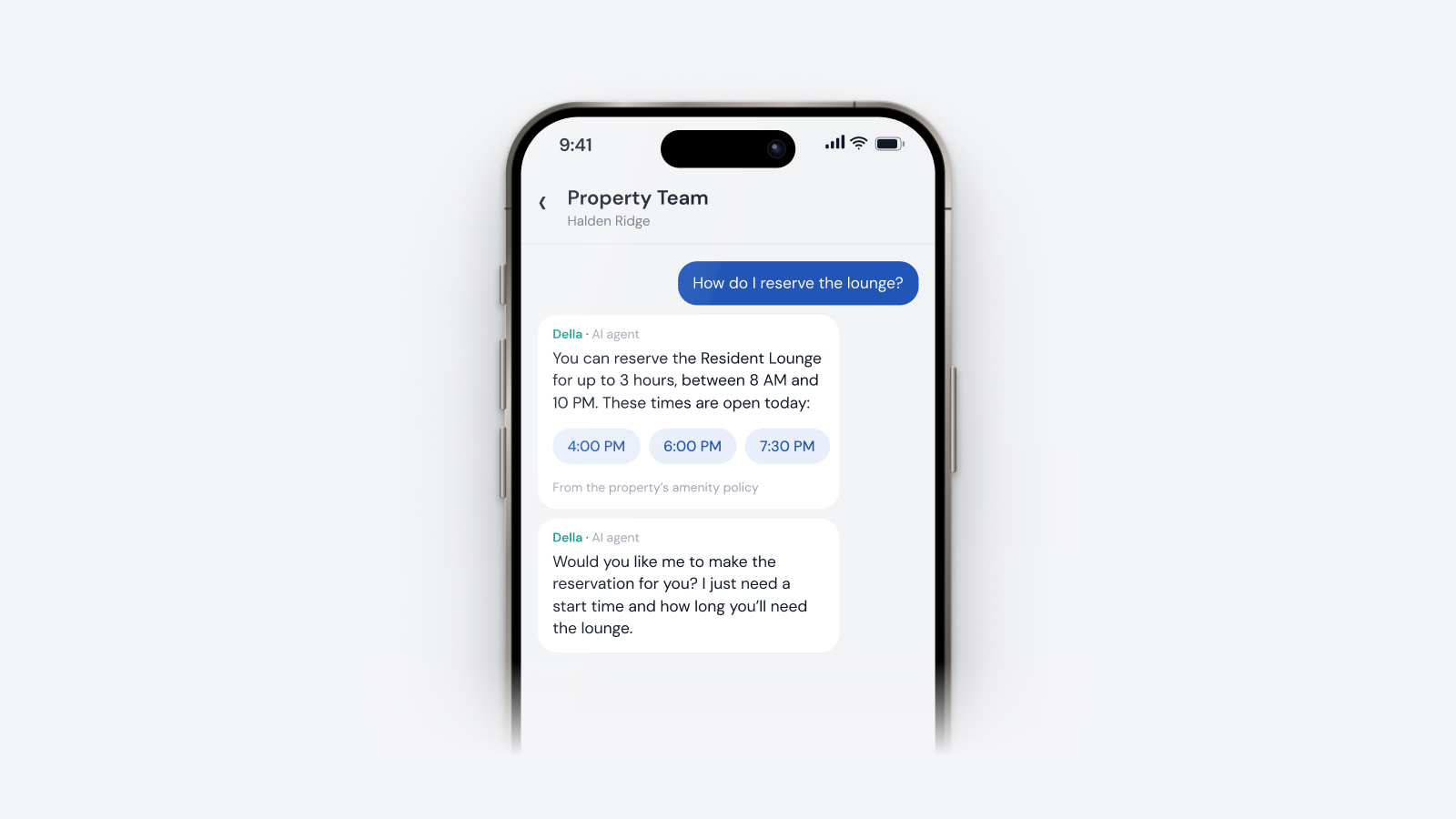
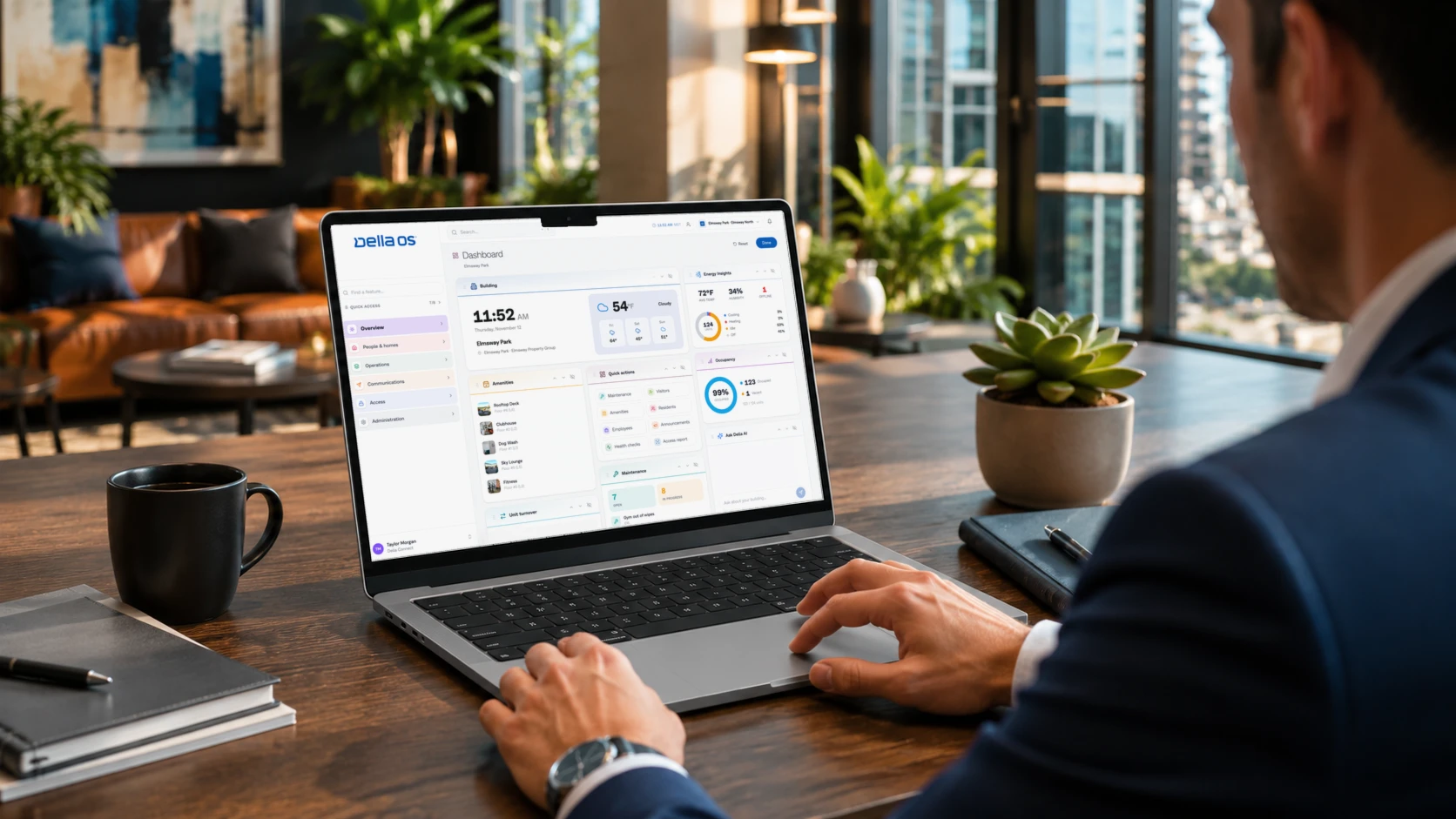
Della OS is the smart building operating system for multifamily and residential properties, from apartments and student housing to senior living and condominiums. Your PMS runs the business. Della runs the building. Della OS keeps Yardi, Entrata, RealPage, AppFolio or ResMan as the system of record and uses its lease and occupancy events to coordinate access control, smart locks, intercoms, Wi-Fi, thermostats, sensors, parking, packages, maintenance and resident services. Because Della knows the real temperature, occupancy and usage in every unit, it can give a BAS the unit level detail it has always lacked, and in many buildings it takes on enough of the work that the BAS can be smaller. Staff work in Della Connect, residents use Della Resident, and integrators design each building in Mission Control. See the whole platform on the Della OS overview.
Frequently asked questions
What does a building operating system do?
It connects the PMS, the building's systems and the people in it, and turns events such as a move in or move out into coordinated actions across access, devices, networks, services and maintenance, with permissions and an audit trail.
Is a building operating system the same as a BAS?
No. A BAS runs central mechanical equipment and isn't resident facing. A building operating system coordinates the whole property around the lease and the people in it.
Can Della OS work with our BAS?
Yes. Della can give a BAS unit level temperature, occupancy and usage, so central equipment responds to real demand.
Do we still need a BAS?
Usually for central plant, yes. But because Della handles much of the unit level work, some buildings need a smaller BAS than planned.
Does a building operating system replace the PMS?
No. The PMS stays the system of record for leases and the business.
Read what a building operating system is, what a BAS does in an apartment building and why building systems don't work together, or book a walkthrough.