The short answer: a smart building is a building whose systems, such as access control, smart locks, intercoms, thermostats, lighting, leak sensors, Wi-Fi and parcel lockers, are connected so they share information and act together automatically. In an apartment community, the smartest buildings go one step further: they take their cues from the property management system (PMS), so a new lease, a move-in or a move-out changes the building without anyone entering data twice.
Most buildings already contain plenty of technology. A building becomes smart when that technology stops working in isolation. Four things have to be in place:
Devices without the platform are just gadgets. A platform without business context is just a dashboard. A smart building has all four.
Smart building technology for apartments usually falls into eight groups. Few properties need all of them on day one, and most already own some:
The first seven are hardware categories, and good options exist in each. The eighth decides whether they behave like one building or like seven separate systems.
The easiest way to see it is to follow a move-in. A lease is signed in the PMS. In a smart building, that one event sets everything else in motion: the resident gets a digital key for their unit, the front door and the amenities they are entitled to; their Wi-Fi is ready; the thermostat leaves its vacant unit setting; and the resident app shows their packages, amenity bookings and maintenance requests from day one.
A move-out runs the same way in reverse. Credentials are revoked, services stop, the unit returns to vacant mode and a turnover work order opens. Nobody on site has to remember to update six systems, because the systems update each other.
That is the real test of a smart building: when something changes, do the systems respond together, or does a person have to tell each one?
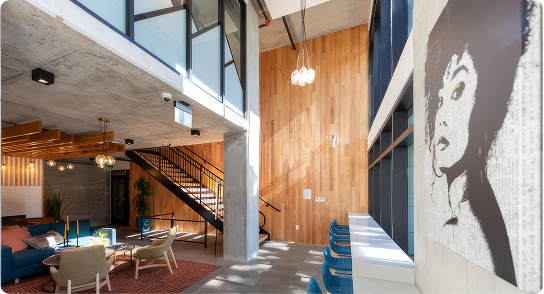
Regius Square is a 124 unit apartment community in Salt Lake City, managed by Asset Living. Before it was connected, the property ran separate systems for access control, smart locks, thermostats, intercoms, packages and amenities, and residents juggled several apps.
Groove Technology Solutions deployed Della OS and connected the property's dormakaba smart locks, Interel thermostats, PDK access control and ButterflyMX intercoms into one platform, with one resident app. When a resident books or changes an amenity reservation, door access updates automatically.
The property reported 43% fewer resident complaints and 35% lower energy costs, and Parks Associates recognized it as Most Innovative Property of the Year. Those are one property's results, and every building is different. Read the Regius Square case study.
The two terms are often used interchangeably. When people do separate them, a smart building is one whose systems are connected and can be monitored and controlled, often remotely. An intelligent building goes further: it uses data, analytics and increasingly AI to make decisions and act on them, such as setting back HVAC when a unit is vacant, flagging a device that is about to fail, or routing a leak alert to the right technician with the unit, resident and access details attached.
In practice the label matters less than the outcome. A building that only shows you every system on one screen is still asking people to do the work. A building that acts on what it knows is doing the work for them.
For apartment communities, the value comes from connecting all three layers to the lease, so the building knows who should have access to what, and when.
"Smart build" usually refers to designing technology into a building during construction: the network, conduit, device locations and integrations are planned from day one. That is ideal, but most apartment communities are existing buildings. They can become smart too, usually by connecting the equipment already installed rather than replacing it, and swapping hardware only where it genuinely needs to change.
Owners are moving quickly. Parks Associates research found that nearly 90% of US apartment owners and operators were planning to deploy, upgrade or replace a smart building solution within 12 months.
Della OS is a smart building and smart apartment platform for multifamily, student housing and condominium communities. The PMS stays the system of record; Della OS uses its lease and occupancy events to coordinate access, Wi-Fi, climate, amenities, packages, maintenance and resident services across the hardware a property already owns, deployed by certified integrator partners. Your PMS runs the business. Della runs the building.
Book a walkthrough to see it on one of your own properties.
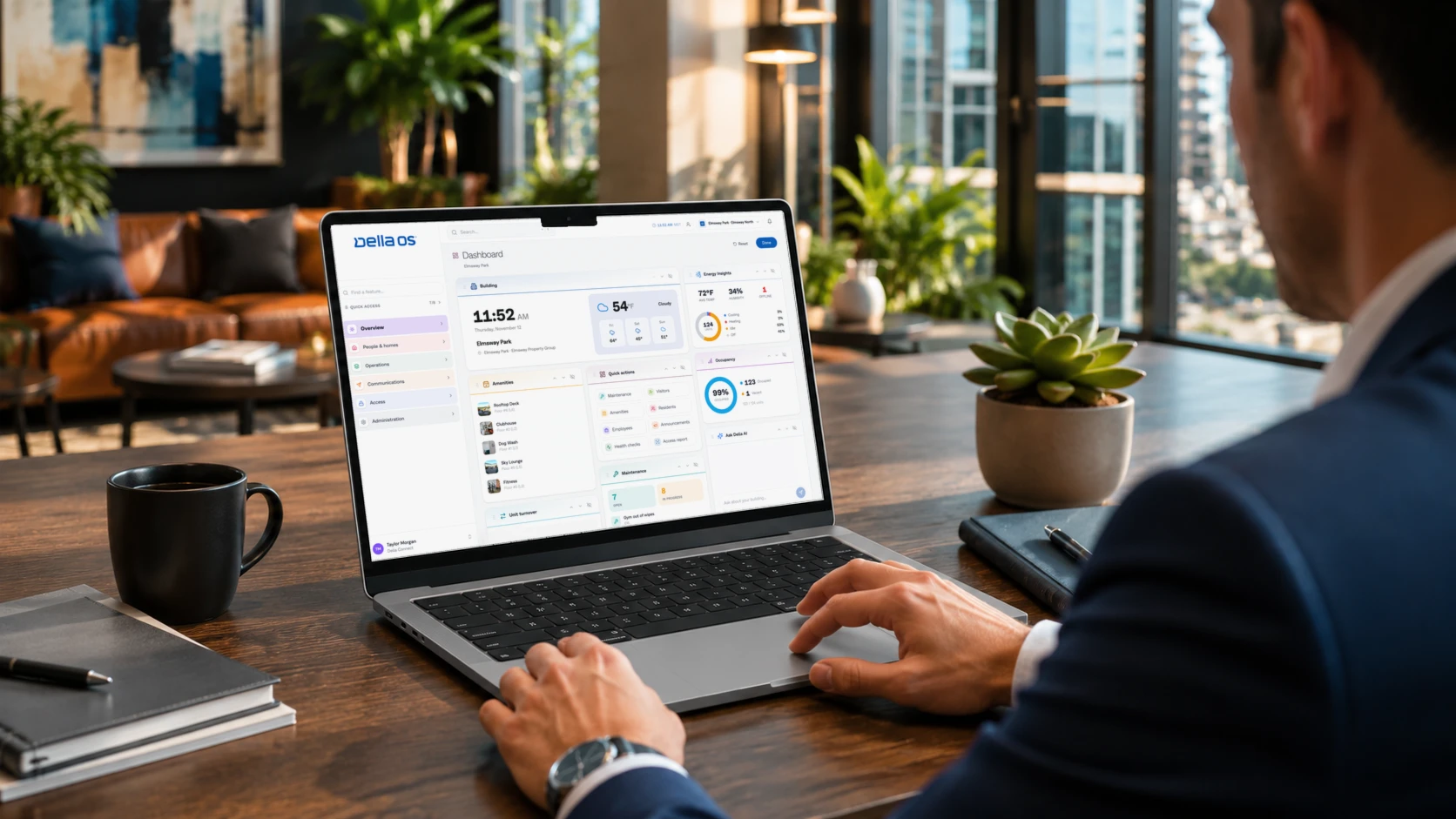
Your PMS runs the business.Della runs the building.
Across every system and every property.

Solutions
Digital SignageOccupancy SyncPerks and ServicesSmart ApartmentsStudent HousingCondominiumsIntegrationsResident app