How to Cut HVAC Energy Costs in Vacant Apartment Units

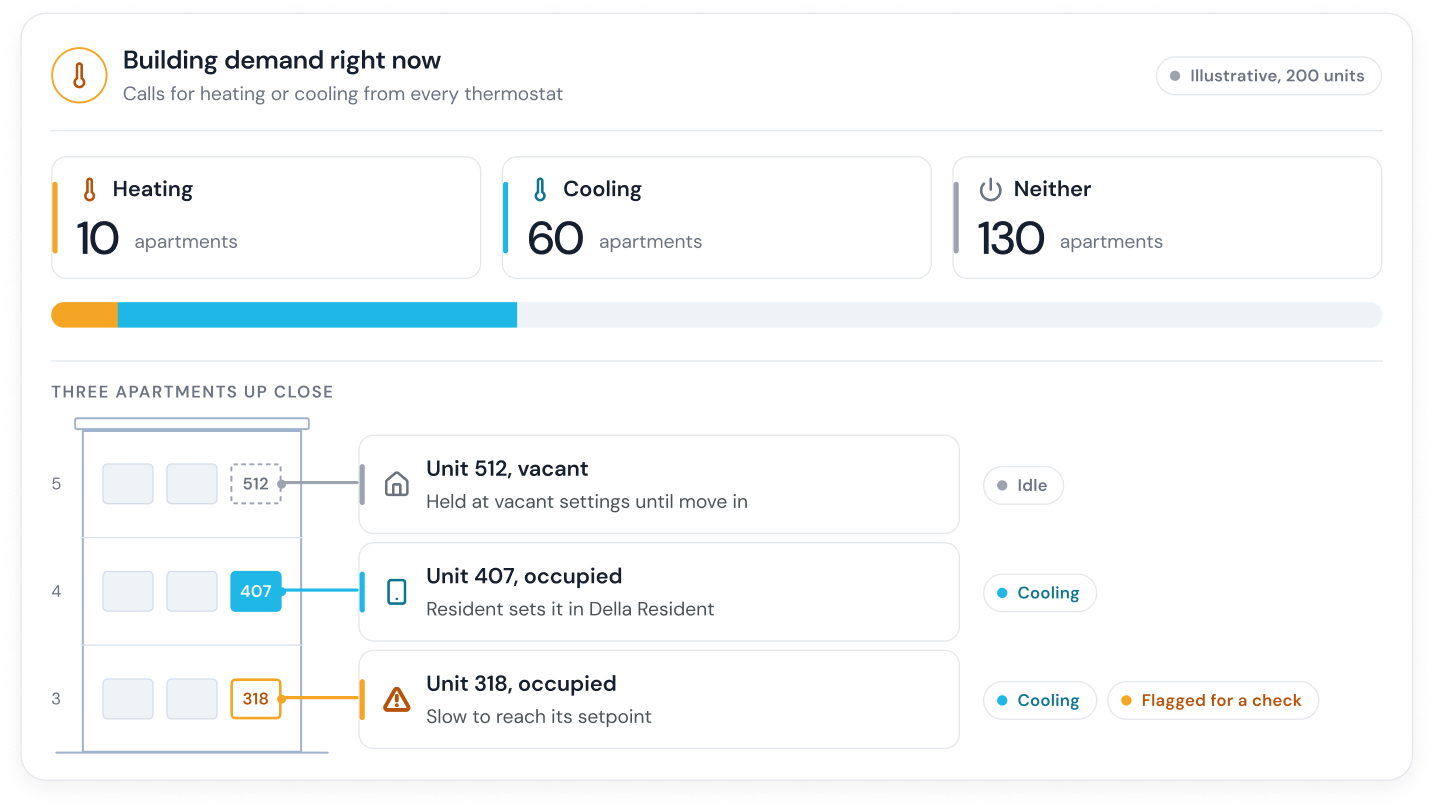
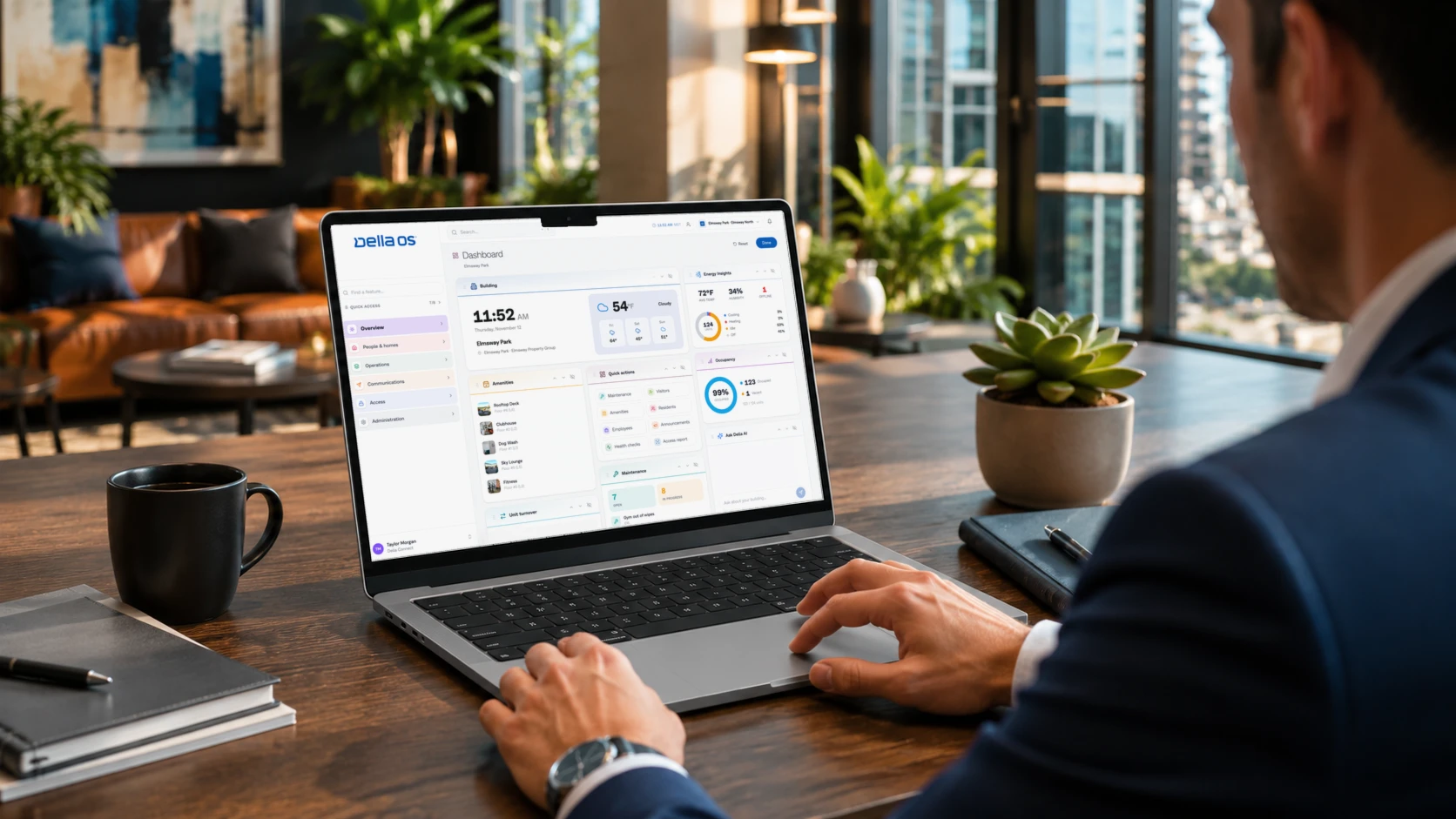
Illustrative Della OS view of heating and cooling calls across a 200 unit building, with Unit 512 vacant and held at vacant settings until move in
Nov 16, 2026
Della Team

The short answer: stop conditioning vacant units as if someone lived there. Switch each unit to vacant settings automatically when the lease ends, within limits that protect against frozen pipes, heat and humidity. Watch vacant units remotely for problems, and give control back to the resident at move in. Tie it to the lease in your property management system (PMS), so it doesn't depend on someone remembering at every turnover.

Why vacant units waste energy

Turnover is busy. Thermostats are left at the last resident's setting, or turned up for a work crew and never turned back. Nobody is there to notice a unit running all day, or a thermostat that has stopped responding.

How to cut vacant unit HVAC costs, step by step

  1. Set vacant limits for your climate and equipment. A heating floor that protects pipes, and a cooling ceiling and humidity limit that protect finishes. Your maintenance team sets these, and your insurer may have requirements.
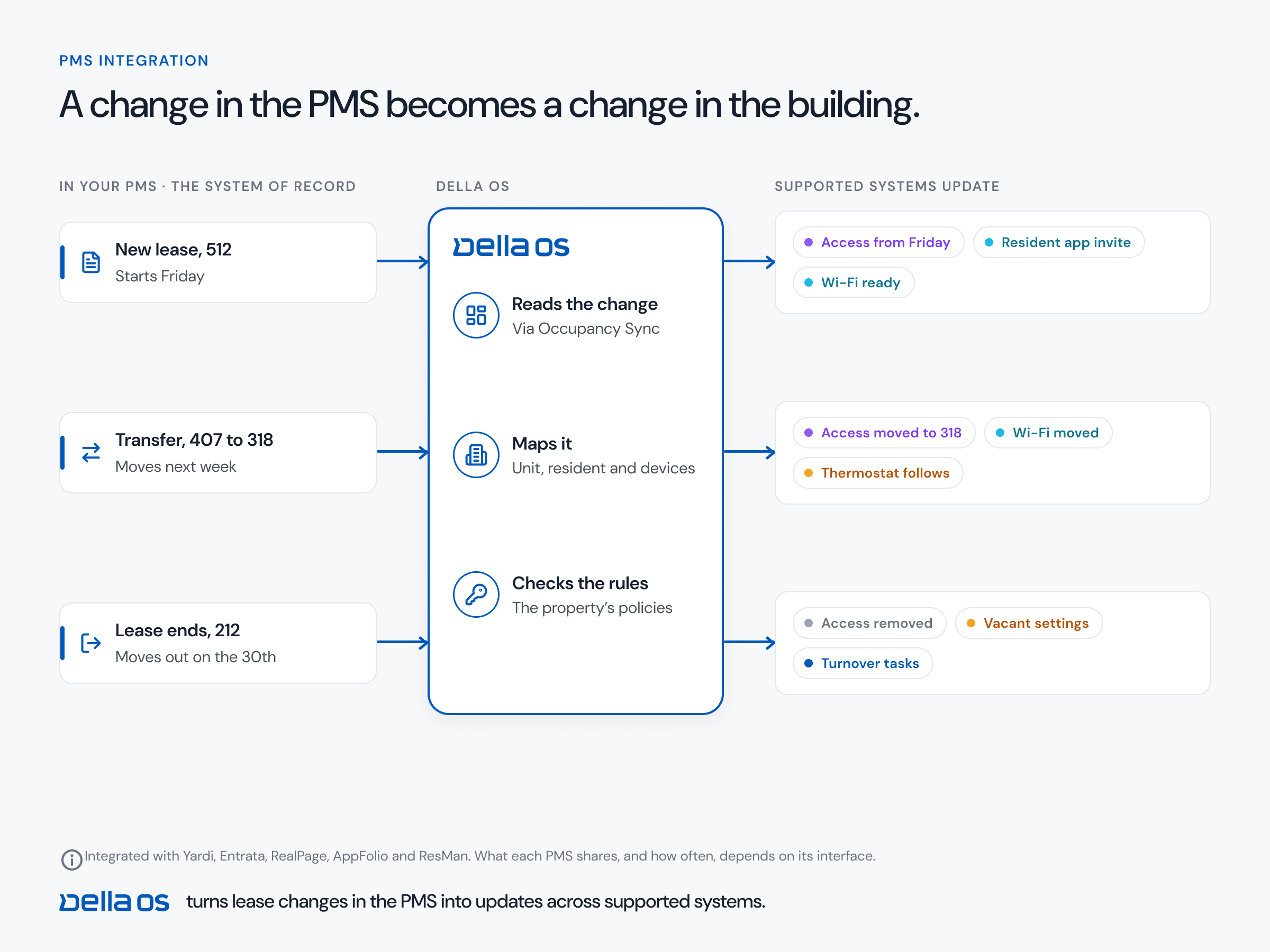
  2. Tie the switch to the lease. A move out in the PMS puts the unit on vacant settings; a move in gives control back to the resident.
  3. Plan for work crews and tours. Decide how temporary changes are handled, and make sure the unit returns to its vacant settings afterwards.
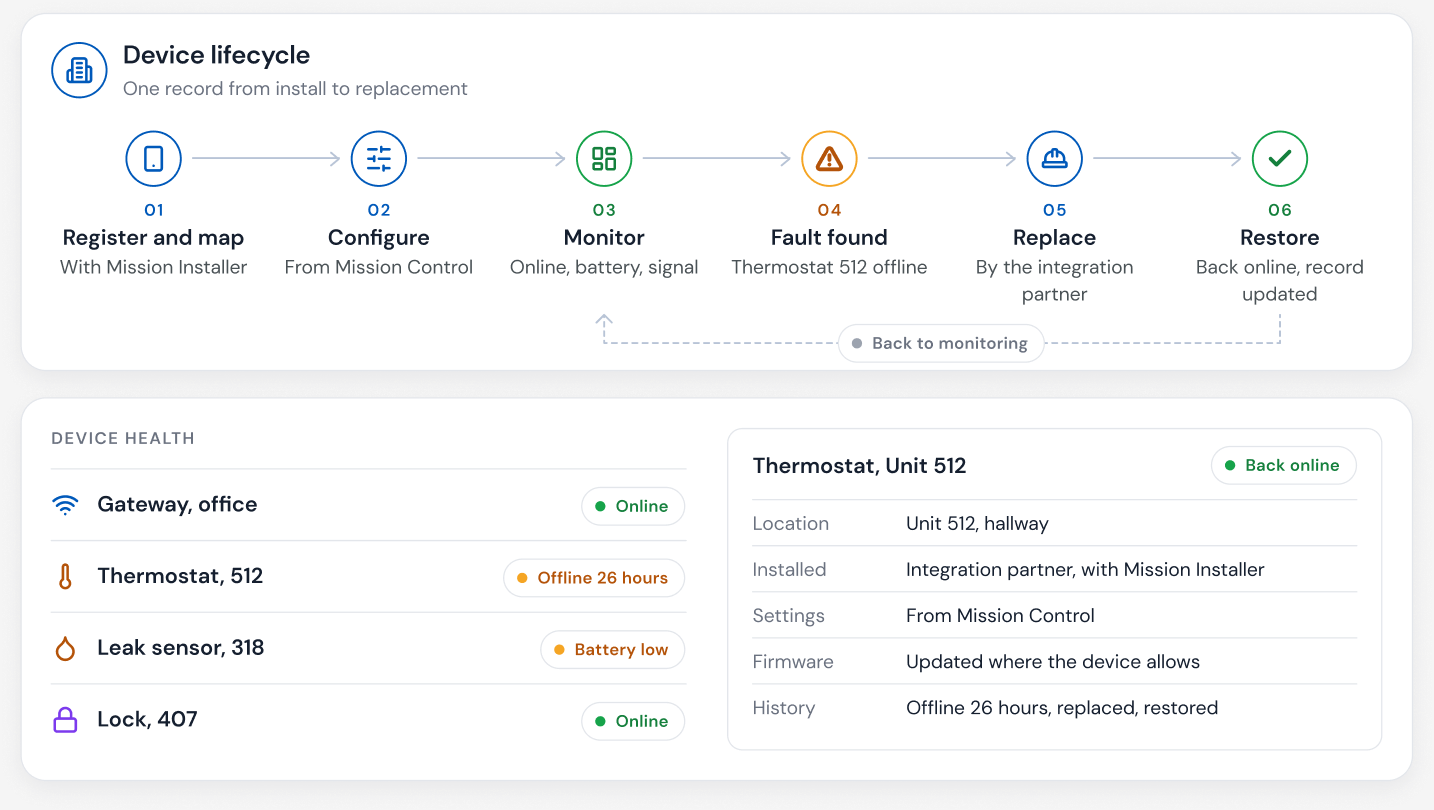
  4. Watch vacant units remotely. Get an alert when a unit drifts outside its limits, a thermostat stops responding or a unit can't reach its setpoint, and open a work order automatically.
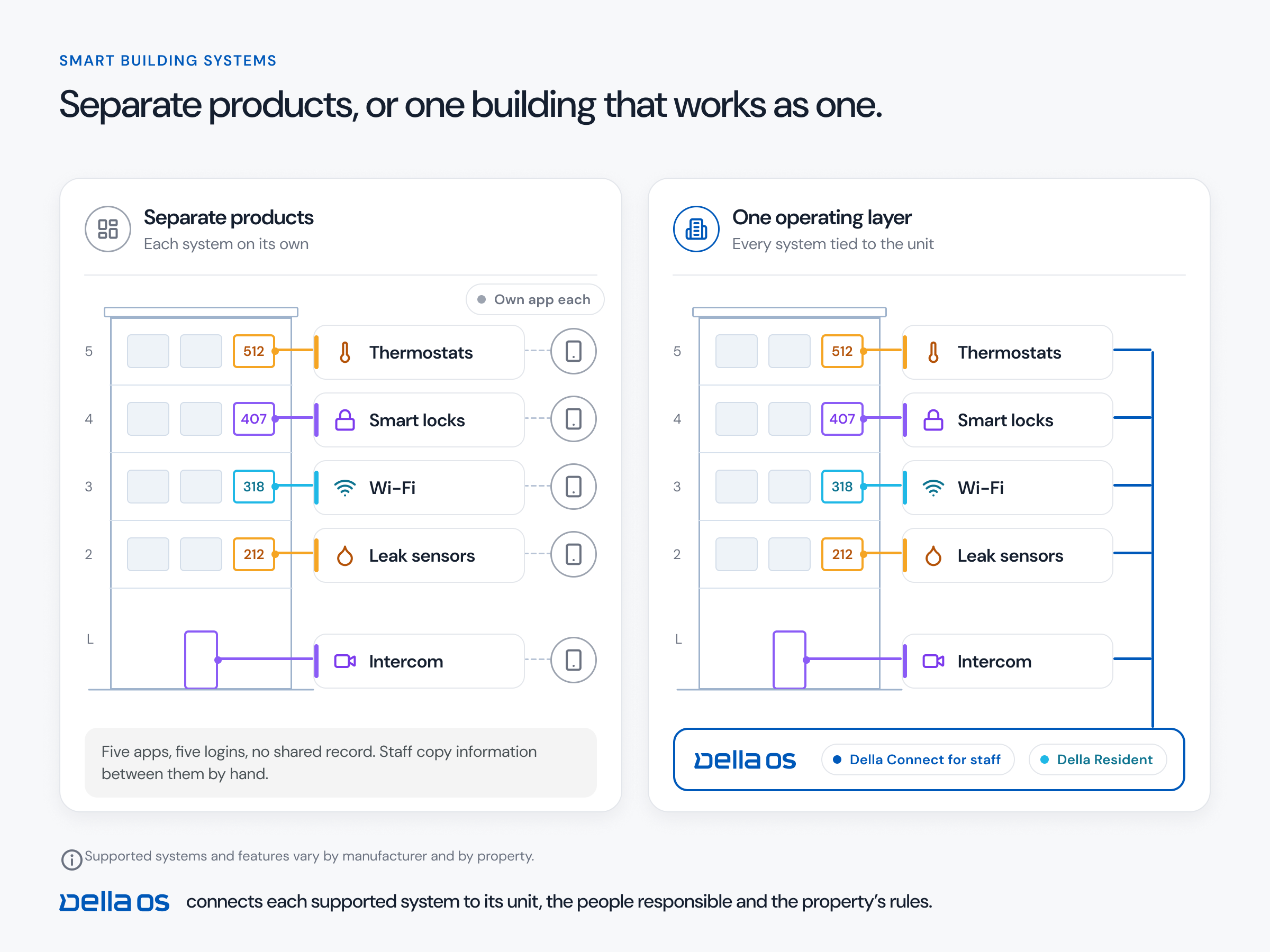
  5. Add leak detection. No one is in a vacant unit to notice a leak. Sensors can alert the right person, and a compatible valve can shut the water off.
  6. Measure honestly. Record vacant unit energy use before you start, compare the same season after, and report results per property.

What about central heating and cooling?

Vacant unit savings come from the thermostats and controls inside each unit. Central equipment such as boilers and chillers stays with the building automation system, though Della OS can communicate with it where a property connects it.

Where Della OS fits

Della OS connects supported thermostats, for example Honeywell, Interel and UEI, to occupancy. Vacant units switch to schedules that save energy automatically and change back after move in, and residents adjust comfort in Della Resident within the limits the property sets. Teams can adjust temperatures remotely, set alert thresholds, see when a unit isn't reaching its setpoint or a thermostat stops responding, and have a maintenance ticket opened automatically. HVAC energy dashboards show consumption across buildings. See how it works with the UEI TIDE Touch thermostat.

At Regius Square, managed by Asset Living, the property reported 35% lower energy costs after its systems were connected on Della OS. That is one property's result, not a promise. Read the case study.

Frequently asked questions

How do you reduce HVAC energy costs in vacant apartment units?

Put vacant units on vacant settings automatically when the lease ends, keep them within safe limits, watch them remotely and give control back to the resident at move in.

What temperature should a vacant apartment be kept at?

There is no single number. It depends on the climate, the building and the equipment. Limits should prevent frozen pipes, overheating and humidity damage, and your maintenance team and insurer should set them.

How much can vacant unit setbacks save?

It depends on climate, equipment, how long units sit empty and how the building is run. Regius Square reported 35% lower energy costs after connecting its systems on Della OS, which is one property's result.

Do we need new thermostats?

Not necessarily. Della OS connects supported thermostats, and compatibility is confirmed model by model before deployment.

Can residents still set their own temperature?

Yes. Residents keep the controls the property allows. Vacant settings apply only while a unit is empty.

Does this work with a building automation system?

Yes. Central equipment stays with the building automation system, and Della OS works with the thermostats inside each unit, communicating with the building automation system where a property connects it.

Read about smart thermostats for apartments and how smart building software lowers operating costs, or book a walkthrough.

Questions

Frequently asked questions.

Keep reading

Related articles.

See all articles →
Della OS walkthrough

See it on your building.

Book a walkthrough and we'll show you how Della OS would run one of your properties, with your PMS and the hardware you already have.

Related