The short answer: yes, when it removes work rather than adding another dashboard. The savings come from fewer manual access changes and trips to units, fewer separate software subscriptions, energy setbacks in vacant units, earlier leak detection and new resident service income. How much depends on the building, its equipment and how it is run, so measure a baseline before you start and compare the same property after.
Regius Square, a 124-unit community in Salt Lake City managed by Asset Living, reported 35% lower energy costs and 43% fewer resident complaints after its systems were connected on Della OS. Those are one property's results. Energy savings depend on climate, equipment, occupancy and how the building is run, so treat any single percentage as an example, not a promise. Read the case study.
Often, if you start with the outcomes that remove the most manual work. Many owners begin with software only (PMS sync, the resident app, messaging, amenities and maintenance) and add devices later. With Della OS, about 60% of capabilities need no new hardware.
Della OS connects the PMS, building systems and people so work is eliminated rather than moved around. Your PMS runs the business. Della runs the building.
Yes, mainly through automatic vacant-unit setbacks, remote climate control and leak detection. Savings depend on the building and should be measured against a baseline.
Yes, by removing manual access and data-entry work, reducing trips to units and consolidating separate software.
Often, if you start with software-only outcomes that remove manual work, then add devices over time.
No. Results depend on each building. Regius Square reported 35% lower energy costs, which is one property's result.
Book a walkthrough to see Della OS on one of your own properties, or browse the systems Della OS works with.
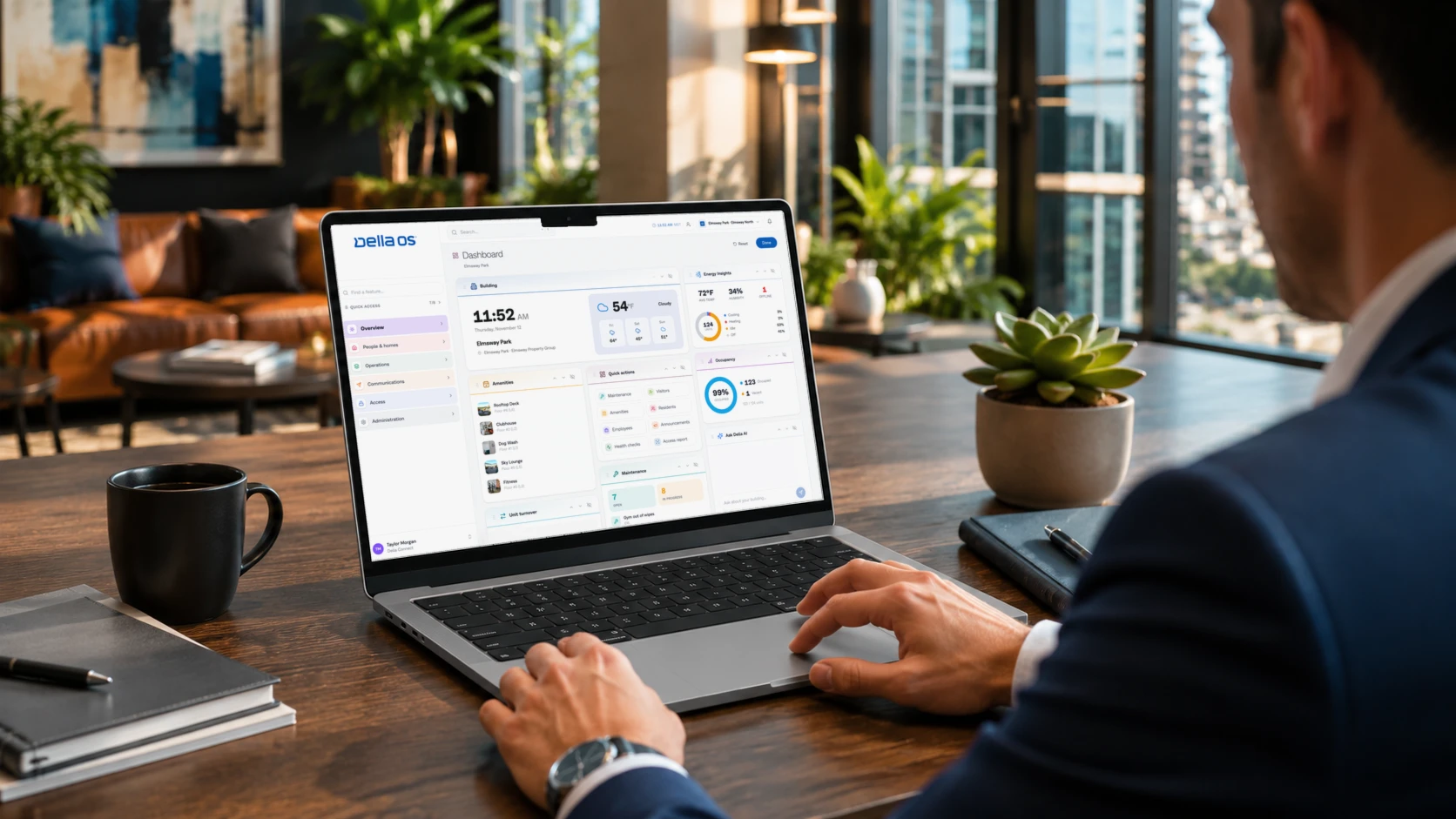
Your PMS runs the business.Della runs the building.
Across every system and every property.

Solutions
Digital SignageOccupancy SyncPerks and ServicesSmart ApartmentsStudent HousingCondominiumsIntegrationsResident app