Vacant unit energy settings move empty apartments to an energy saving thermostat setting and keep them protected until the next resident arrives. In Della OS, supported thermostats move to the vacant setting automatically from the lease in the PMS.
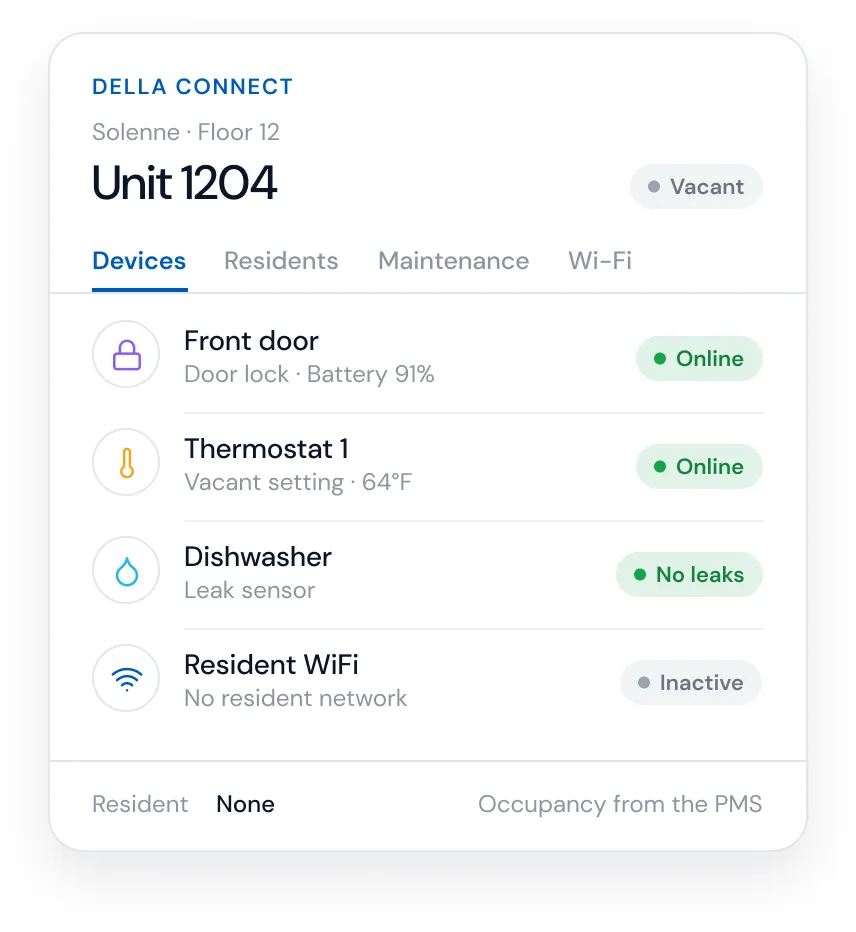
Empty units are often heated or cooled as if someone lived there, because nobody remembers to change the thermostat after move out. Across a portfolio, that is a steady and avoidable energy cost. Vacant units also carry the highest risk from leaks and freezing, because nobody is there to notice.
When a unit becomes vacant, the thermostat moves to a setting that saves energy while protecting the unit from extreme temperatures. When the next resident is due, the unit returns to comfort settings. Doing this by hand depends on someone remembering every time.
Occupancy Sync reads move outs from the PMS, and supported thermostats move to the vacant setting automatically, while leak watch stays on and leak alerts in a vacant unit go to property management first. In student housing and other shared units, a climate zone stays at comfort settings while anyone is still assigned to it and moves to the vacant setting only when the whole zone is empty. Staff see each unit's status and thermostat history in Della Connect.
Lower energy use in empty units, protection against temperature and water damage, and the same rule applied at every property without relying on memory.
Not necessarily. Della OS works with supported thermostats from brands such as Honeywell and UEI, and your integration partner confirms compatibility.
The climate zone stays at comfort settings until nobody is assigned to it.
Yes. Staff can adjust supported thermostats from Della Connect, for example before a showing.
Smart thermostats for apartments · Leak detection · Unit turnover and make ready · Occupancy Sync
Della OS walkthrough
Book a walkthrough and we'll show you how Della OS would run one of your properties, with your PMS and the hardware you already have.
Related
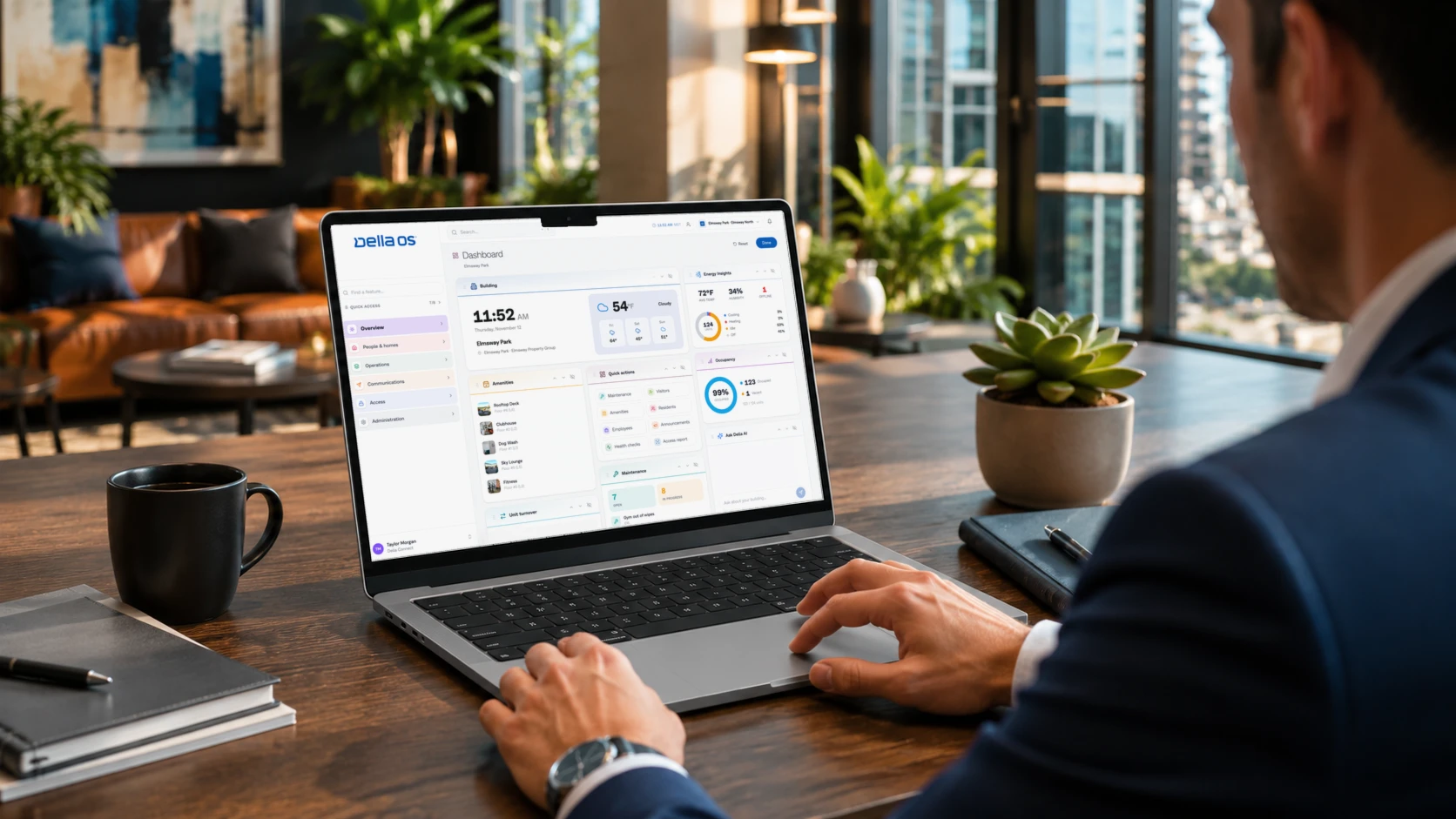
Your PMS runs the business.Della runs the building.
Across every system and every property.

Solutions
Digital SignageOccupancy SyncDella MarketplaceSmart ApartmentsStudent HousingCondominiumsSenior LivingIntegrationsResident app